Reverse logistics is what happens after a product travels back from the customer: how it is returned, what condition it arrives in, and where it goes next. For online brands, the volumes are large. Parcelhero estimated that £1.55 billion worth of goods were sent back to UK retailers over Returnuary 2026 alone.
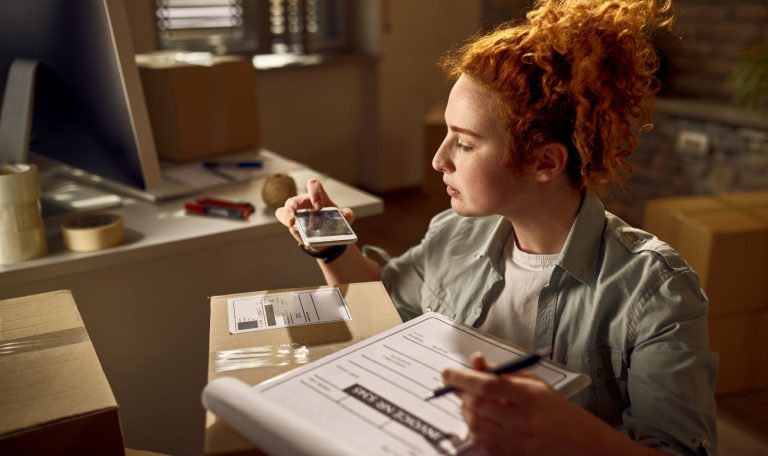
Most of that work happens out of sight, in the warehouse. Returned items have to be received, checked, graded and either restocked or sent elsewhere, and brands that use a fulfilment partner usually have this handled through outsourced returns management in the same building that ships their orders.
This guide covers:
- What reverse logistics means, in plain terms
- How it differs from returns management
- The 5 Rs of reverse logistics
- How the reverse logistics process works, step by step
- The main benefits and challenges for UK eCommerce brands
- Practical ways to recover more value from returns and cut waste
What Is Reverse Logistics?
Short answer: reverse logistics is the process of moving products from the customer back to the seller, manufacturer or a recovery point after the sale. Each item is then resold, repaired, repackaged, recycled or, as a last resort, disposed of responsibly.
Most supply chains are built to move goods one way: from supplier to warehouse to customer. That is forward logistics. Reverse logistics covers the opposite direction, and it is also known as:
- Returns logistics
- The reverse supply chain
- Aftermarket logistics
The Reverse Logistics Association defines it broadly as any activity connected to a product after the point of sale. In practice, the two directions work very differently.
| Forward logistics | Reverse logistics | |
| Direction | Warehouse to customer | Customer back to the business |
| Who starts it | The business, based on orders | The customer, a retail partner or a regulator |
| Predictability | Can be forecast from sales | Hard to forecast, with sharp peaks |
| Item condition | Known before dispatch | Unknown until inspected |
| Destination | One: the customer | Several: stock, repair, resale, recycling or disposal |
| Main goal | Deliver value | Recover value |
What Is the Difference Between Reverse Logistics and Returns Management?
Short answer: returns management is one part of reverse logistics. It covers customer returns specifically, while reverse logistics covers everything that moves backwards through the supply chain, including recalls, repairs and unsold stock.
Returns management is the end-to-end workflow for customer returns:
- The returns policy
- Return authorisation
- Shipping the item back
- Inspection and grading
- Refunds, exchanges and store credit
- Deciding what happens to each item
Reverse logistics includes all of that, plus product recalls, warranty repairs, unsold stock coming back from retail partners, failed deliveries and packaging designed for reuse.
A simple rule of thumb: every customer return is part of reverse logistics, but reverse logistics also covers products that were never returned by a customer.
| Returns management | Reverse logistics | |
| Scope | Customer returns | Every product or material moving backwards |
| Starts with | A customer return request | A return, recall, repair, failed delivery or stock withdrawal |
| Usually owned by | Customer service and operations | Operations, supply chain and compliance |
| Key metrics | Return rate, refund time | Recovery rate, cost per return, dock-to-stock time |
What Are the 5 Rs of Reverse Logistics?
Short answer: the 5 Rs are returns, recalls, repairs, repackaging and recycling. They describe the main routes a product can take once it moves back through the supply chain.
Returns
Customer returns are the highest-volume part of reverse logistics for most online brands.
- Common reasons: wrong size, damage in transit, product not as described, change of mind
- What it involves: authorisation, return shipping, inspection, refund or exchange
- Why it matters: each return reason points to something that can be fixed upstream
Recalls
A recall happens when a product turns out to be unsafe or non-compliant, and the business has to trace every affected unit, tell customers and bring the stock back.
For UK brands selling into the EU, recalls are tied to the General Product Safety Regulation (GPSR, EU 2023/988):
- Responsible Person: most non-food consumer products placed on the EU market need a Responsible Person based in the EU
- Their role: the Responsible Person is the contact point for market surveillance authorities, and can handle safety notifications through the EU’s Safety Business Gateway
- Why location matters: recalls move faster when the Responsible Person, the product documentation and the stock sit together, rather than with three separate providers
This is one reason many UK brands pair Netherlands fulfilment with a Dutch Responsible Person for their EU sales.
Repairs and Refurbishment
Items with minor faults don’t always need to be written off.
- Repairs: a faulty item is fixed and sent back to the same customer, often under warranty
- Refurbishment: a returned item is repaired, tested and resold, usually as refurbished or B-grade stock
- Most common in: electronics, small appliances and homeware with replaceable parts
Repackaging
Many returned products are perfectly sellable, but the outer packaging is torn or a label is missing.
- Items are relabelled or repacked, then go back into available stock
- It is one of the cheapest ways to recover value from a return
- Repacking in recyclable or reused materials keeps the environmental cost down
Recycling and Disposal
This is the final route, for anything that cannot be resold, repaired or donated. A useful order of priority is:
- Resell
- Refurbish
- Donate
- Recycle
- Dispose of responsibly
What Are the 7 Rs of Reverse Logistics?
Short answer: there is no single agreed 7 Rs model. Most versions add resale and refurbishment to the 5 Rs, to show the routes that recover value before an item is recycled.
Types of Reverse Logistics in eCommerce
What is an example of reverse logistics? A customer returning a jacket that doesn’t fit is the most common one, but online brands deal with several other types too.
| Type | What it is | eCommerce example |
| Customer returns | Products sent back by the end customer | A wrong-size jacket returned through a returns portal |
| Failed deliveries | Parcels returned to sender before reaching the customer | A parcel refused at the door or sent to an incorrect address |
| Product recalls | Stock withdrawn because of a safety or compliance issue | A batch of pet toys with a loose part pulled from sale |
| Repairs and warranty claims | Faulty items sent back to be fixed | A hair styling tool returned under warranty |
| Unsold stock | Stock returned by a retail or wholesale partner | Unsold winter homeware sent back from a stockist |
| Packaging returns | Items designed to come back for reuse | Reusable mailers, refill containers or display units |
How the Reverse Logistics Process Works
Most eCommerce returns move through six stages. The detail changes with your returns policy and product type, but the structure stays the same.
<H3> 1. Return Request and Authorisation
- The customer starts a return through a portal, by email or through customer service
- They choose a reason and an outcome: refund, exchange or store credit
- The request is checked against the returns policy
- If approved, the customer receives a return merchandise authorisation (RMA) number and a returns label
A self-service portal speeds this up and records the return reason at source, which becomes valuable data later on.
2. Collection and Transport
- The customer drops the item at a Post Office, parcel locker or carrier point, or books a collection
- Drop-off points group many returns into fewer courier journeys, which lowers cost and emissions
- Both the customer and the brand should be able to track the return in transit
3. Receiving and Inspection
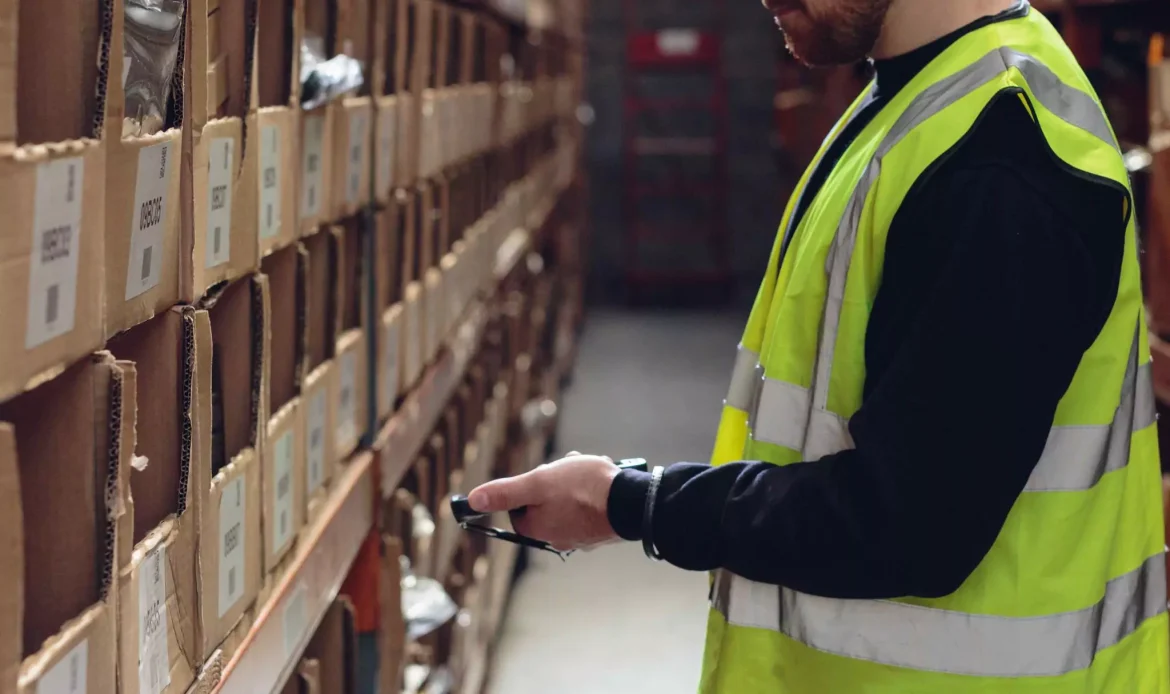
When the return arrives at the warehouse, it is matched to its RMA. Staff then check:
- That the right item has come back
- That it is complete, with all parts and accessories
- That its condition matches the reason given
This is also the point to catch returns that don’t meet the policy, such as used items, late returns or empty boxes. Checking before any refund is issued is known as gatekeeping.
4. Grading and Disposition
Each item is graded and sent down the right route. This decision is called disposition, and it decides how much value the business recovers.
| Item condition | What happens next |
| As new, packaging intact | Back into sellable stock |
| Good, packaging damaged or labels missing | Repackaged or relabelled, then restocked |
| Minor fault | Repaired or refurbished, then resold |
| Unsellable but reusable | Donated, sold through secondary channels or broken down for parts |
| Unsellable | Recycled, or disposed of responsibly as a last resort |
5. Refund, Exchange or Store Credit
Once inspection is complete, the resolution is issued. Speed matters, because slow refunds drive repeat contacts and shape whether the customer buys again.
Automated updates at three points help:
- Return received
- Inspection complete
- Refund issued
6. Restocking and Data Feedback
- Sellable items go back into available inventory quickly, so stock levels across your website and marketplaces stay accurate
- The time from arrival to back on sale is called dock-to-stock time, and it is one of the clearest measures of how well the process runs
- Return reasons and condition grades go back to the buying, product and customer service teams, so the causes of returns can be fixed
What Are the Benefits of Reverse Logistics?
Short answer: a good reverse logistics process recovers value from returned stock, keeps customers buying again, keeps inventory accurate and reduces waste.
- Cash flow: returned items are graded and back on sale sooner, so less money is tied up in a returns area
- Customer loyalty: a quick, clear return is often the last interaction before a customer decides whether to buy again
- Stock accuracy: sales channels show what is really available, so you don’t miss sales on items sitting unprocessed
- Product insight: return reasons show which products, suppliers or listings are causing problems
- Less waste: more items are resold, repaired or recycled instead of written off
What Are the Challenges of Reverse Logistics?
Short answer: the main challenges are unpredictable volumes, items arriving in unknown condition, the cost of handling low-value returns, cross-border returns and return fraud.
| Challenge | Why it happens | What helps |
| Unpredictable volume | Returns don’t follow the sales forecast and peak in January | Planning extra capacity for the post-Christmas period |
| Variable condition | Every item needs a person to inspect and grade it | Clear grading rules so decisions are quick and consistent |
| Low-value items | Some returns cost more to handle than the product is worth | “Keep it” refunds on low-value lines |
| Cross-border returns | EU returns to a UK warehouse face customs paperwork, duty and VAT reclaim admin, and longer transit | Processing EU returns at an EU warehouse, inside the single market |
| EU product compliance | Safety issues on EU sales must go through a Responsible Person and the relevant authority | A Responsible Person in place before a problem happens |
| Fraud and policy abuse | Wardrobing, empty-box returns and used items sent back as new | Inspection before refund |
| Data gaps | Return reasons are collected but never reviewed | A monthly review of returns by SKU |
How to Improve Your Reverse Logistics Process
You won’t stop every return, but you can reduce how many happen and recover more value from the ones that do.
Prevent Avoidable Returns at the Product Page
- Use clear images from several angles
- Give exact measurements and honest size guides
- Add fit notes such as “runs small” or “relaxed fit” based on real return reasons
- Make sure colours on screen match the product in hand
Reduce Fulfilment Errors
- Barcode scanning at pick and pack confirms the right product, size and colour goes into every parcel
- Right-sized protective packaging cuts breakages and often lowers shipping costs too
Set a Clear Returns Policy
Show the policy on product pages, at checkout and in order confirmation emails. It should cover:
- Time limits for returns
- The condition items must be in
- Who pays for return postage
- How long refunds take
Paid returns are now common in the UK, although customer expectations haven’t fully caught up:
| Finding | Source |
| Only 24 of 100 leading UK retailers still offer fully free returns | Retail Economics |
| 45% of returns over peak 2025/26 were paid for, rising to 69% among smaller retailers | ZigZag |
| 65% of UK online shoppers expect returns to be free in all cases | Whistl |
Many brands now take a middle route: free returns for faulty or incorrectly sent items, and a small charge or store credit for change-of-mind returns.
Track the Right Reverse Logistics Metrics
| Metric | What it tells you |
| Return rate by SKU | Which products cause the most returns |
| Return reason mix | Whether returns come from fit, damage, errors or change of mind |
| Dock-to-stock time | How quickly items go from arrival to back on sale |
| Recovery rate | How much returned value you win back |
| Cost per return | The full cost of transport, handling and inspection |
| Refund time | How long customers wait for their money |
Use Return Data to Fix Root Causes
Review return reasons by SKU every month and look for patterns:
- One product repeatedly returned as “too small” points to a sizing or description issue
- One supplier’s items arriving damaged points to packaging or manufacturing problems
- One colour returned more than others may look different on screen
Most eCommerce returns management systems already capture this data. The gap is usually acting on it.
Reverse Logistics and Sustainability
Every return adds a transport journey, more packaging and more handling. Parcelhero estimates a single return can generate up to 4.2kg of CO2.
Reverse logistics decides how much of that becomes waste. Practical ways to reduce it:
- Drop-off returns: steer customers to drop-off points so returns travel together
- Fast grading: get sellable items back on sale before they age and get written off
- Greener repacking: use recyclable or reused materials instead of new plastic
- Reuse before disposal: route unsellable stock to donation, recycling or parts first
- Fewer repeat returns: use return data to fix the cause, since the lowest-impact return is the one that never happens
This is where reverse logistics connects to the circular economy. In a closed-loop supply chain, products and materials stay in use for as long as possible rather than ending up in landfill.
Handling Reverse Logistics Yourself or Through a 3PL
Who is responsible for reverse logistics? The seller is, but the physical work can sit in-house or with a third-party logistics (3PL) partner.
| In-house | Through a 3PL | |
| Control | Direct control over every decision | Rules agreed with the partner, who applies them |
| Space and staff | Needs dedicated space and trained people | Handled by the partner’s returns team |
| Peaks | January volumes fall on your own team | The partner absorbs the extra volume |
| EU returns | Usually shipped back to the UK | Can be processed at an EU warehouse |
| Reporting | Depends on your own systems | Return reasons and condition reported back |
| Tends to suit | Lower volumes | Growing volumes, EU sales, seasonal peaks |
Whichever route you choose, it is worth knowing the answers to these questions:
- How quickly do returned items go back on sale?
- What return reason and condition data is captured, and who sees it?
- How are recalls and safety issues handled for EU sales?
- What happens to stock that cannot be resold?
Green Fulfilment, for example, processes returns at its UK fulfilment centres and at Venlo in the Netherlands, so EU returns stay in the EU, and works with a Dutch Responsible Person partner so GPSR documentation and recall handling sit alongside the stock. As a certified B Corp, it routes unsellable items to reuse and recycling before disposal.
Reverse Logistics FAQs
What is reverse logistics in simple words?
It is the journey a product takes back from the customer to the business, and what happens to it once it arrives: resale, repair, repacking, recycling or disposal.
What companies use reverse logistics?
Any business that sells physical goods. In eCommerce it is most visible in fashion, footwear, beauty, homeware and consumer electronics, where return rates are higher and many items can be resold.
Is reverse logistics the same as a reverse supply chain?
The terms are often used interchangeably. Reverse supply chain usually describes the wider network of partners and decisions, while reverse logistics refers to the physical movement and handling of goods coming back.
Why is reverse logistics important?
It decides how much value a business recovers from returns. Good reverse logistics gets stock back on sale faster, keeps customers buying again and reduces the waste that returns create.
What is the first step in reverse logistics?
The return request. The customer asks to send an item back, and the business checks it against the returns policy before issuing a return authorisation and label.
How long should reverse logistics take?
There is no fixed standard, but the aim is to inspect, grade and restock returns within days of arrival, and to issue refunds as soon as inspection is complete.