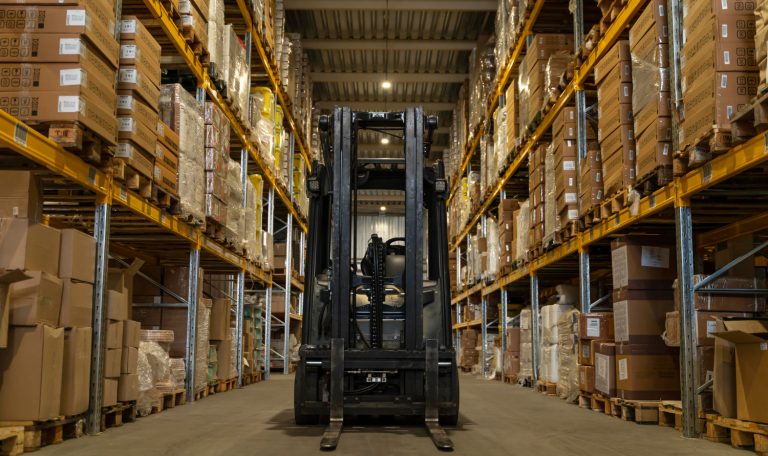


Every parcel that leaves a warehouse carries a decision. Someone chose what fills the space around the product, and that important choice determines whether the item arrives intact.
That material is called dunnage. Most brands treat it as a small packing detail, but eCommerce retailers know that it is now a reportable cost. Since 2025, the material used as void fill counts towards UK packaging fees, and the rate paid per tonne depends on what it is made of. Plastic sits at more than double the paper rate.
This guide covers what dunnage is, the material options available, how to choose between them, and what the switch away from plastic really costs or saves.
What is dunnage?
Dunnage is the protective material used to secure, cushion and stabilise goods during storage and transit. It fills void space so products cannot move inside a box or container, absorbs shock from handling, and protects items against moisture and friction. Common examples include kraft paper, air pillows, bubble wrap, foam inserts, corrugated pads and timber blocks.
To define dunnage more practically, it is anything in the box that is not the product, the carton or the label.
The term covers two scales of work.
- Parcel-level dunnage
The paper, pillows and inserts inside a single eCommerce order. - Freight-level dunnage
Timber blocks, plywood sheets and inflatable bags used to brace pallets inside containers and trailers.
The word comes from sea freight. Timber was laid beneath and between cargo to keep it clear of damp decks and stop it moving in heavy weather. The job has not changed since, but the materials have.
This is why dunnage matters
Most transit damage happens inside the box. The carton arrives looking fine, and the product inside has shifted, hit a wall or taken the weight of something stacked on top.
Parcels get thrown, stacked, dropped and sorted by machine. Dunnage takes out the space that lets any of that reach the product. A damaged arrival is rarely just the price of the item.
| Cost | What it covers |
| Replacement unit | Cost of goods, gone twice |
| Outbound postage | Paid on the original and again on the replacement |
| Return carriage | Where the damaged item comes back |
| Support handling | Staff time per ticket, plus the refund admin |
| Lifetime value | Customers who receive damaged goods order less often |
One under-packed order can wipe out the margin on several good ones, which is why returns data is worth reading alongside packing decisions rather than separately from them.
Damp is the other risk. Parcels sit in wet trailers, on depot floors and in unheated vans overnight, and corrugated pads or paper wrap keep products clear of those surfaces.
Then there is what the customer sees. A product rattling loose in an oversized box reads as carelessness, even when nothing is broken.
Types of dunnage
Different dunnage materials suit different products. The table below splits the options by where they are used.
Parcel-level materials
| Material | Best for | Kerbside recyclable | Reusable |
| Kraft and dunnage paper | Void fill for light and medium items | Yes | Limited |
| Corrugated inserts and pads | Layering, separating, fixed shapes | Yes | Yes |
| Moulded pulp trays | Fragile items on repeat SKUs | Yes | Yes |
| Air pillows | Filling large voids in light parcels | No, film only | Yes while intact |
| Bubble wrap | Wrapping fragile surfaces | No, film only | Yes while intact |
| Starch loose fill | Irregular shapes | No, compostable | No |
| Foam inserts | High-value items needing a precise fit | Rarely | Yes |
Freight-level materials
| Material | Best for | Notes |
| Dunnage boards and timber | Bracing heavy or palletised loads | Needs ISPM 15 treatment for export |
| Inflatable dunnage bags | Gaps between pallets in containers | Reusable, some grades recyclable |
| Plywood sheets | Separating stacked loads | Reusable across several journeys |
It’s worth remembering that dunnage paper is the default for most SME eCommerce brands. It is cheap, it recycles at kerbside, and customers understand what to do with it without a printed instruction.
Timber dunnage crossing a border must be heat treated and stamped under ISPM 15. That applies to blocks and boards as well as pallets. Brands moving stock into EU fulfilment centres get caught by this more often than they expect, usually at the point the load is refused.
Dunnage and pallets
Pallets and dunnage travel together, so the line between them gets blurred. It matters more than it used to, because packaging is now reported by material and by weight.
A pallet is a load carrier. It holds goods from beneath so they can be lifted and moved as one unit. Dunnage sits between, around or on top of goods to stop them shifting. A pallet is not dunnage. Plenty of what ships alongside it is, including timber separator boards, corner posts, edge protectors and slip sheets.
The distinction shows up on the fee schedule as well. Wood is reported as its own material category, and the rate has moved sharply for the 2026 to 2027 year.
Is bubble wrap sustainable?
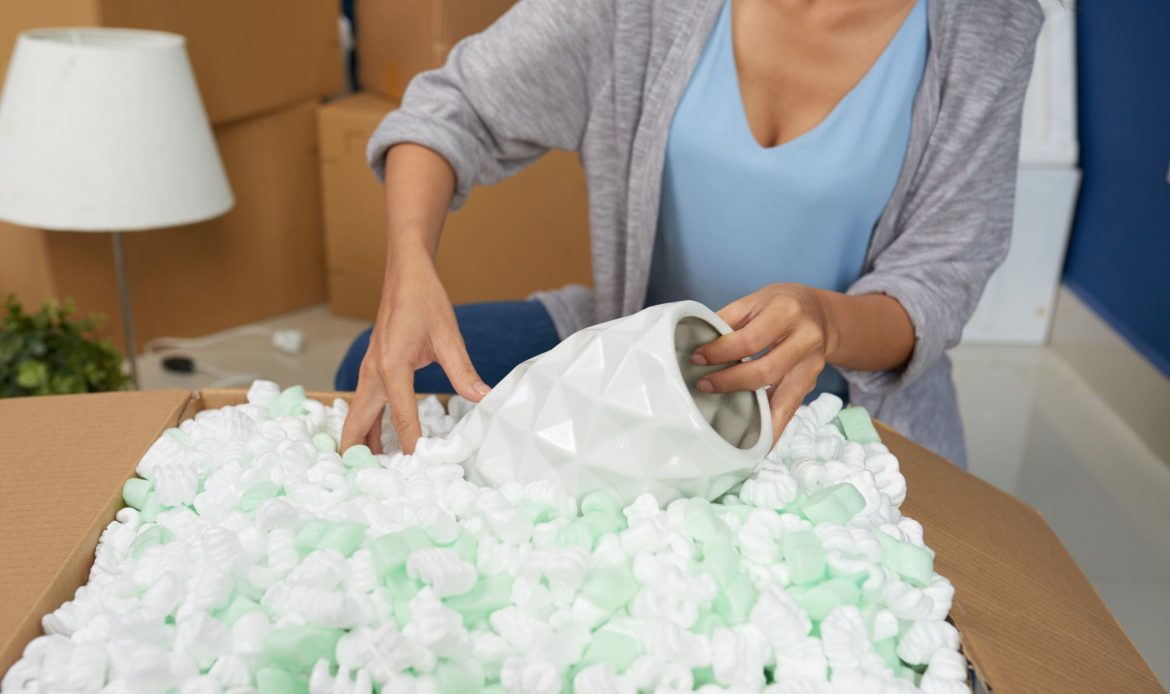
Bubble wrap is low-density polyethylene, a film plastic. It is recyclable in principle. In practice, most UK kerbside collections do not accept plastic film, so it has to reach a supermarket collection point or it goes to general waste.
The honest answer is more mixed than the usual verdict.
- It is light. Lower parcel weight means lower shipping cost and lower transport emissions.
- It reuses well. Intact bubbles protect across several journeys, and reuse beats recycling on impact every time.
- It performs. Replacing it with paper often means using more paper by weight to reach the same protection.
Where it fails is recovery. Very little of it returns to the material stream. It is also the most expensive common void fill to place on the UK market, which is the point that has changed the maths for most brands.
There is no such thing as sustainable bubble wrap in a strict sense. There are recycled-content versions and paper-skinned alternatives that behave similarly, and those are covered below.
Sustainable alternatives to bubble wrap and air pillows
The dunnage packaging market has moved towards paper-based options, driven as much by cost and regulation as by consumer preference. These are the practical eco-friendly dunnage choices and what each one is actually good at.
Honeycomb paper wrap
The closest direct swap for bubble wrap. It expands as it is pulled and grips itself without tape. Good for wrapping bottles, jars and boxed goods. Bulkier than film, so check your box range still fits.
Kraft paper void fill
Crumpled paper for filling gaps. Cheapest per parcel, recycles at kerbside, and works for the majority of non-fragile orders.
Corrugated and moulded pulp inserts
Best where the same product ships repeatedly. A tooled pulp tray costs more up front and then outperforms loose fill on both protection and material use.
Starch loose fill
Made from cornstarch, dissolves in water, compostable at home. Good for awkward shapes. It fails in damp storage and is not suited to long sea transit.
Recycled-content and paper-skinned air pillows
A middle option that keeps the low weight of film while cutting virgin plastic. Paper-skinned versions recycle with card.
Reusable and returnable packaging
Strong in B2B and closed-loop routes. For D2C at SME volume the reverse logistics rarely pays for itself yet, so treat it as a longer-term option rather than a quick switch.
Plastic-free eCommerce packaging is achievable for most non-fragile catalogues. Glassware, electronics and anything with a high unit value usually still needs a cushioning layer that paper struggles to match.

What dunnage costs under EPR
Packaging Extended Producer Responsibility turned void fill from an operational choice into a reported cost. Shipment packaging is in scope, so the paper or plastic inside the box is measured, reported and charged by weight.
PackUK published these base fees for the 2025 to 2026 scheme year.
| Material | Base fee per tonne |
| Glass | £192 |
| Paper and card | £196 |
| Steel | £259 |
| Aluminium | £266 |
| Wood | £280 |
| Plastic | £423 |
| Fibre-based composite | £461 |
Plastic costs £227 more per tonne than paper and card. A brand placing 10 tonnes of void fill on the market in a year saves roughly £2,270 by moving from plastic pillows to paper, before any change in shipping weight or damage rate is counted.
The fees stop being flat in April 2026 and become modulated. Each material is rated red, amber or green under the Recyclability Assessment Methodology, and the rate moves with the rating. Indicative year two figures put paper and board at £190 per tonne on a green rating, against £455 for plastic on amber and £545 on red.
Three points matter for planning.
- Wood has moved sharply. Indicative year two rates for wood run from £410 to £540 per tonne, against a £280 base fee in year one. Brands shipping palletised loads with timber dunnage should check their tonnage before the next reporting deadline.
- Missing data defaults to red. Packaging that is not reported properly is rated in the highest band. Accurate records of what goes into each parcel are now worth money.
- Not everyone pays. Disposal fees fall on large producers. Smaller obligated businesses report packaging data without paying the disposal fee. Check your obligation status and current rates on gov.uk, because both are reviewed annually.
The EU empty space rule
Businesses shipping into the EU face a second constraint. Under Article 24 of the EU Packaging and Packaging Waste Regulation, eCommerce, transport and grouped packaging must keep empty space to no more than 50% of internal volume. The regulation applies from August 2026, with the 50% cap enforced from January 2030.
The detail that catches people out is how empty space is measured. Void fill counts as empty space. Bubble wrap, air cushions, paper and loose fill do not improve the ratio. The only way to meet it is a smaller box.
Choosing the right dunnage
Match the material to the way the product fails.
Work out the failure mode first – Rigid and fragile items fail on impact and need a cushioning layer against the surface. Items that survive impact but shift around need void fill. Those are two different jobs and often two different materials.
Right-size the box before changing the filler – Most over-packing is a box problem. A closer-fitting carton cuts void fill volume, reportable tonnage, shipping cost and the EU empty space ratio in a single move. Getting this right depends on how packing stations are set up and how wide the box range is.
Match the material to the shipping mode – Air freight prices weight, so paper-heavy packing costs more per parcel. Road and sea involve more handling and longer transit, which favours sturdier materials. Heavier and awkwardly shaped items need bracing rather than cushioning.
Test before rolling out – Take the ten SKUs that ship most, pack them both ways, and drop test both. Then track damage claims for a month after the switch. A material change that lifts the damage rate by one percentage point can cost more than the packaging saving returns.
How to use less dunnage
The cheapest dunnage is the dunnage you do not use. Reducing volume improves the damage rate, the fee position and the dunnage environmental impact at the same time.
- Carry a wider box range so packers can pick a closer fit.
- Use on-demand paper and pillow systems that produce to the measured void instead of a fixed sheet size.
- Reuse inbound packing material that arrives with supplier stock.
- Write packing standards per SKU so material use does not vary between packers.
- Review the top 20 SKUs quarterly. Product dimensions change more often than box ranges do.
3PLs and Dunnage
A fulfilment partner controls three things a brand cannot manage well from a distance. Material sourcing at volume, consistent application across every order, and the packaging data sitting behind the reporting.
The third one is underrated. A fulfilment centre knows which box and which filler went into every parcel, which is the record needed to report packaging tonnage accurately and avoid a default red rating. Green Fulfilment works with brands on box range, filler choice and the data behind both as part of its sustainable fulfilment services.
Dunnage sits where three costs meet. Damage rate, packaging fees and shipping weight. A material that wins on one can lose on the other two, which is why the choice is worth making per product group rather than once for the whole catalogue.
Start with box size. Pick the filler second. Test it before it reaches customers.
FAQs About Dunnage
What is dunnage in simple terms?
Dunnage is anything packed around a product to stop it moving and absorb impact during transit. Paper, air pillows, bubble wrap, foam and cardboard inserts are all dunnage.
Is a pallet considered dunnage?
No. A pallet is a load carrier rather than dunnage. Timber separator boards, corner posts and slip sheets used with a pallet do count as dunnage.
What is the most sustainable dunnage material?
There is no single answer. Paper and corrugated options recycle at kerbside and carry lower packaging fees, which suits most catalogues. Fragile and high-value products may still need a cushioning material that paper cannot match, in which case reuse matters more than material type.
Is bubble wrap recyclable in the UK?
Yes in principle, but not through most kerbside collections. Plastic film needs to go to a supermarket front-of-store collection point. Reuse is the better route while the bubbles stay intact.
Does dunnage count towards packaging EPR fees?
Yes. Void fill is shipment packaging and is reportable by weight and material. Plastic void fill carries a higher rate per tonne than paper and card.