


Winning a new customer usually costs more than selling more to the ones you already have. That is why so many growing eCommerce brands look for ways to lift the value of each order rather than chase endless new traffic. Product bundling is one of the most direct ways to do it.
This guide explains what product bundling is, how it differs from kitting, the main pricing approaches, examples that work across different sectors, and how bundles get fulfilled once order volumes grow.
What is product bundling?
Product bundling means grouping two or more products together and selling them as a single unit, usually at a price that makes the combination more appealing than buying each item separately.
A familiar example is a skincare set: a cleanser, a moisturiser and a serum sold together as a complete routine, often for slightly less than the three products would cost individually. The customer gets a ready-made solution and the seller earns more per transaction.
Brands use bundling for two reasons: one, it makes buying easier for the customer, who no longer has to work out which items go together, and two, it raises the average value of each order for the seller. Done well, it also helps move stock that might sell more slowly on its own.
What is kitting, and how is it different from bundling?
Bundling and kitting are often confused, but they describe two different things.
Bundling is the sales and pricing strategy, it’s what the customer sees on your storefront: a set of products offered together at a set price.
Kitting is the operational process behind it. In a warehouse, kitting means assembling several individual products (each with its own SKU) into a single, ready-to-ship unit that carries its own new SKU. The kitted item is picked, packed and dispatched as one product rather than as several separate lines.
The link between the two is straightforward. A bundle sold on your website often becomes a kitted item in the warehouse. The customer buys one thing; behind the scenes, that one thing was built from several. Understanding this distinction matters, because a bundle that sells well on the storefront still has to be assembled accurately and efficiently once orders start arriving in volume.

How product bundling increases average order value
Average order value, or AOV, is the average amount a customer spends per order. You work it out by dividing total revenue by the number of orders over a given period. If your store takes £10,000 across 500 orders in a month, your AOV is £20.
Bundling raises AOV by increasing the value of individual transactions. Instead of a customer buying one £15 item, a well-designed bundle encourages them to buy a £35 set. It also creates a natural way to pair higher-margin or slower-moving products with popular ones, lifting both revenue and stock efficiency.
One point worth keeping in mind: higher revenue is not automatically higher profit. A bundle that leans too heavily on discounting can raise your AOV while quietly eroding your margin. The goal is to increase what each customer spends without giving away the value you have built into your pricing. That means every bundle price should be checked against the margin on its components before it goes live.
Types of product bundling
There are several bundling models, and the right one depends on your products and your customers:
- Pure bundling: the products are only available as a set, not sold individually. This works for items designed to be used together.
- Mixed bundling: the products are available both as a bundle and separately, giving the customer a choice. This is the most common approach in eCommerce.
- Cross-sell or complementary bundling: pairing products that naturally go together, such as a phone case with a screen protector, to prompt a larger order.
- Build-your-own bundling: the customer selects several items from a defined range for a set price. This adds a sense of personalisation and works well for categories with lots of variants.
- Gift or new-customer bundling: a starter set or gift-with-purchase bundle used to introduce new buyers to a range or to increase order size around seasonal peaks.
Product bundle pricing strategies
Pricing is where bundling succeeds or fails. A few practical approaches:
- Discounted bundle pricing: the bundle costs less than the sum of its parts. The discount has to be large enough to feel worthwhile to the customer but small enough to protect your margin.
- Tiered bundling: offering good, better and best versions of a bundle, encouraging customers to trade up to a higher-value set.
- Value-led bundling: grouping products into a considered set, such as a gift edition, and pricing it on the value of the selection rather than on a discount.
To set a bundle price sensibly, start with the margin on each component. Add them up, decide how much discount you can offer while keeping the bundle profitable, and price from there. A bundle that raises AOV but loses money on every sale is not a win.
Product bundling examples that work
The strongest bundles solve a problem for the customer while making commercial sense for the brand. A few examples across sectors:
- Health and beauty: a complete skincare routine sold as one set, giving new customers an easy way to try a full range rather than choosing between individual products.
- Wellness and subscription: a starter kit that introduces customers to a category, bundling a core product with a few complementary items to encourage a first, larger order.
- Homeware: a coordinated set, such as matching bedding or a kitchen essentials bundle, where buying the pieces together is both convenient and better value.
- Pet accessories: a new-owner bundle grouping the practical items a customer needs at once, reducing the effort of buying them separately.
In each case the bundle works because the items genuinely belong together, not simply because they were grouped to lift the order total.
Fulfilling bundles as you scale
A bundle that sells well introduces new operational demands, and this is where many brands run into trouble. Once volumes grow, a few things have to be managed carefully.
Stock has to be tracked at two levels: the individual components and the finished bundle. Sell more of a component in a bundle than you have in stock, and you break every bundle it belongs to. Real-time inventory visibility across both levels is what keeps this from happening.
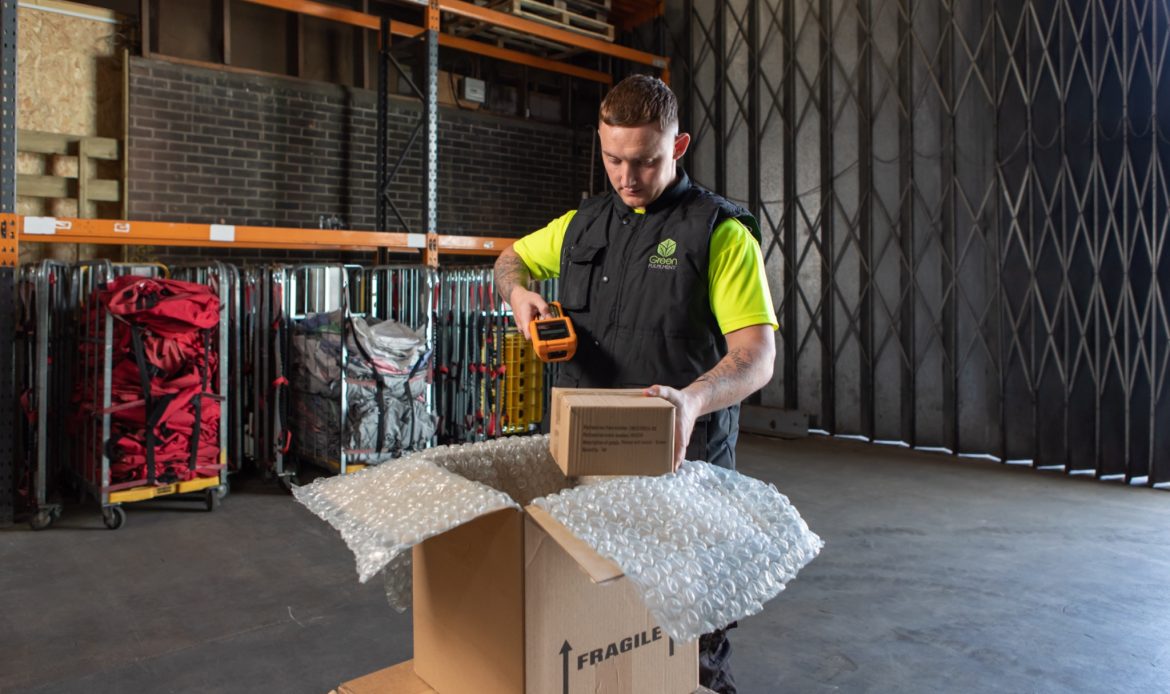
Kitting also has to happen accurately and, ideally, ahead of demand. Assembling bundles in advance of a busy period means faster dispatch, fewer picking errors and a lower packing cost per order, because the warehouse is shipping one kitted SKU rather than gathering several items for every order.
This is the point at which an eCommerce fulfilment partner becomes relevant. A third-party logistics provider will typically kit bundles in advance, hold them as ready-to-ship units, and track component stock in the background to reduce the risk of oversells. Green Fulfilment, for example, handles kitting and multi-SKU stock through its Go Green platform, giving brands a single view of both component and bundle inventory. The practical requirement in all of this is accurate, real-time stock data, because a bundle is only as reliable as the availability of its parts.
Common bundling mistakes to avoid
A few errors come up repeatedly:
- Over-discounting: cutting the bundle price so far that AOV rises but margin disappears.
- Bundling too many items: overloading a bundle until the offer becomes confusing and the perceived value drops.
- Ignoring component stock: promoting a bundle without tracking the availability of every item in it, leading to oversells and cancelled orders.
- Grouping unrelated products: bundling items that do not logically belong together, which customers see through quickly.
Getting bundling right
Product bundling is a low-cost way to raise the value of each order, but it only works when the pricing protects your margin and the fulfilment keeps pace with demand. Get the combination right, and bundling turns existing traffic into higher revenue without the cost of chasing new customers. Get the stock tracking and kitting right alongside it, and those bundles keep shipping accurately even through your busiest periods.
FAQs
What is product bundling in eCommerce?
Product bundling is the practice of grouping two or more products and selling them together as a single unit, usually at a price that makes the set more attractive than buying each item separately. It makes buying simpler for the customer and raises the value of each order for the seller.
What is the difference between kitting and bundling?
Bundling is the sales strategy the customer sees: products offered together at a set price. Kitting is the warehouse process that assembles those separate products into one ready-to-ship unit with its own SKU. A bundle on your storefront often becomes a kitted item in fulfilment.
How does product bundling increase average order value?
Bundling raises the value of each transaction by encouraging customers to buy a set rather than a single item. It also lets you pair popular products with higher-margin or slower-moving ones, lifting both revenue and stock efficiency, as long as the bundle price protects your margin.
How do you price a product bundle?
Start with the margin on each product in the bundle. Add them together, decide how much of a discount you can offer while keeping the bundle profitable, and set the price from there. The discount should feel worthwhile to the customer without giving away your margin.
What products work best for bundling?
Products that are genuinely used together work best, such as a skincare routine, a coordinated homeware set, or a starter kit for a new customer. The items should solve a problem or add convenience when bought together, rather than being grouped only to increase the order total.