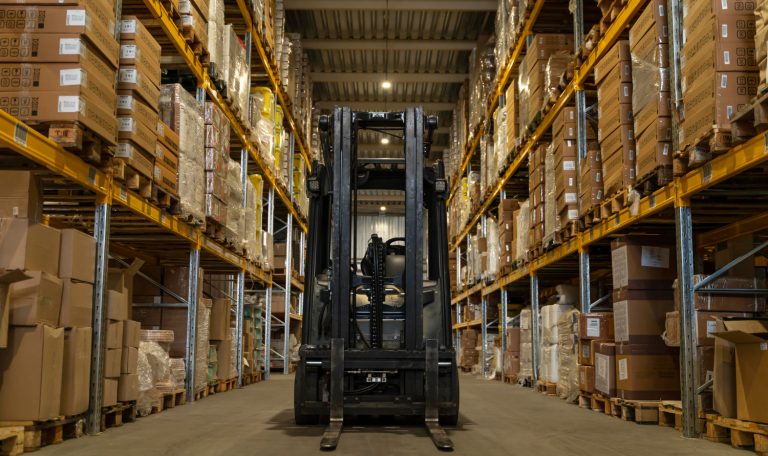


A 16kg stoneware planter is a great sale right up until the box gives way on a courier’s sorting belt. Your customer opens a split carton and a cracked pot, and you end up paying for a replacement, a return collection and a second delivery, often on a service priced by the size of the box rather than what’s inside it.
Heavy orders leave very little room for packing mistakes. The upside is that most damage comes down to method, and the lower-waste choice is often the cheaper one too.
To package heavy items for shipping, use a new double-wall box sized close to the product, cushion the base and fill every gap with dense material, seal every seam with the H tape method, and move to a pallet once the parcel passes your courier’s weight limit.
This guide covers how to do each of those well, which greener materials stand up to real weight, how to keep courier costs under control, and what changes when heavy stock heads from the UK into the EU.
Why Heavy Parcels Fail
A parcel’s trip through a courier network is rougher than most brands imagine. It rides conveyors, drops between belts at sorting hubs, gets loaded by hand and often ends up at the bottom of a stack in the back of a van. Each of those moments puts more force through a heavy box than a light one.
Heavy parcels tend to fail in three places:
- The bottom seam. The full weight of the contents sits on the flaps, and a single strip of tape peels away under load.
- The edges. A drop onto an edge concentrates the impact where the board is weakest.
- Inside the box. Contents that can move build up momentum in transit and hit the walls from within.
The Cost of One Broken Box
When a heavy order arrives damaged, the loss rarely stops at the product. You’re usually covering:
- A replacement unit
- The return journey, which on a bulky item can cost as much as the original delivery
- A second outbound shipment
- Staff time spent on the complaint and the courier claim
- A customer who is less likely to order again
Heavy products deserve their own rules in your returns management process, because every one of those returns moves the same weight and volume twice.
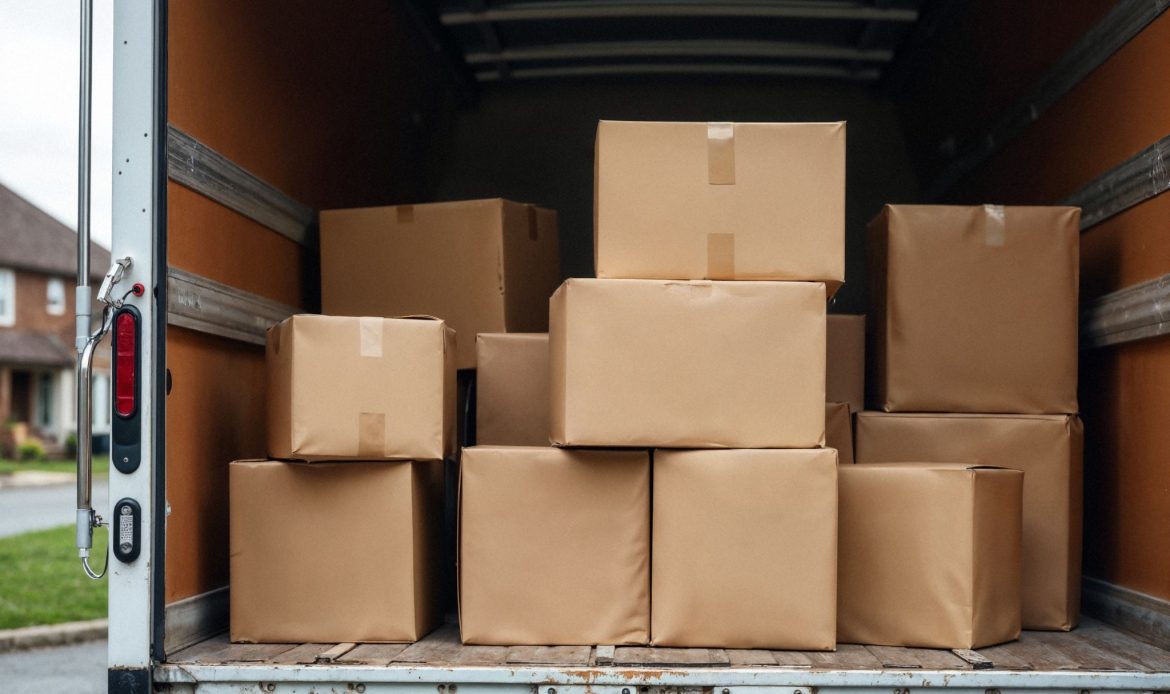
Seven Steps to a Safer Heavy Parcel
Here’s how to package heavy items for shipping, in the order you’d work through them at a packing bench. The same rules cover how to package products of any weight, but heavy items punish shortcuts faster.
If your team packs the same products every week, write these steps into a packing specification for each SKU. That way, every order goes out the same way, whoever is packing that day.
1. Weigh and Measure First
Weigh the product with the packaging you expect to use, then measure its length, width and height. Those figures decide which box you need, which carriers will accept the parcel and what you’ll be charged.
Save the packed weight and dimensions against each SKU in your eCommerce platform or listings. Sellers who guess these figures often undercharge for delivery at checkout and absorb the difference themselves.
2. Choose a New Double Wall Box
Reused boxes can look fine and still be weakened by damp, crushing or old tape. Start heavy orders in new corrugated cardboard packaging.
| Box type | Best for |
| Single wall | Lighter, compact products |
| Double wall | The default for most heavy parcels |
| Triple wall | The heaviest single items and parcels likely to be stacked |
Check the maximum load or strength rating on the box or the supplier’s spec sheet rather than guessing. Then pick the smallest box that still leaves room for cushioning on every side. A right-sized box needs less filler, holds its contents more firmly and costs less with carriers that price on size.
Recycled-content board with FSC certification is widely available in double and triple wall grades, so the outer box can carry the load and still be kerbside recyclable.
If a product is both heavy and fragile, use the box-in-box method. Pack it into a snug inner box, then place that inside a larger outer box with cushioning on all sides between the two.
3. Build a Firm Base
Line the bottom of the box with a corrugated pad, a moulded pulp tray or a thick layer of dense paper cushioning. This layer takes the impact when the parcel is set down hard or dropped.
Skip loose fill here. A heavy item sinks straight through it and ends up resting on bare cardboard.
4. Centre the Item and Fill Every Gap
Place the item in the middle of the box so it isn’t touching any wall. If you’re packing more than one heavy product together, put the heaviest at the bottom and separate each layer with a cardboard divider.
Then fill every gap with material that stays put under weight:
| Use | Avoid under heavy loads |
| Corrugated inserts and dividers | Crumpled newspaper, which flattens quickly |
| Moulded pulp end caps | Loose packing peanuts, which move and settle |
| Honeycomb or crinkled kraft paper, packed tightly | Air pillows, which can burst under pressure |
| Fitted foam inserts for delicate parts | Oversized boxes padded out with filler |
Finish with a shake test. Close the flaps, lift the box and move it gently from side to side. If you can feel anything move, add more dunnage until the item sits firm, using the same dense, paper-based fill from the table above rather than loose peanuts or air pillows.
5. Seal With the H Method
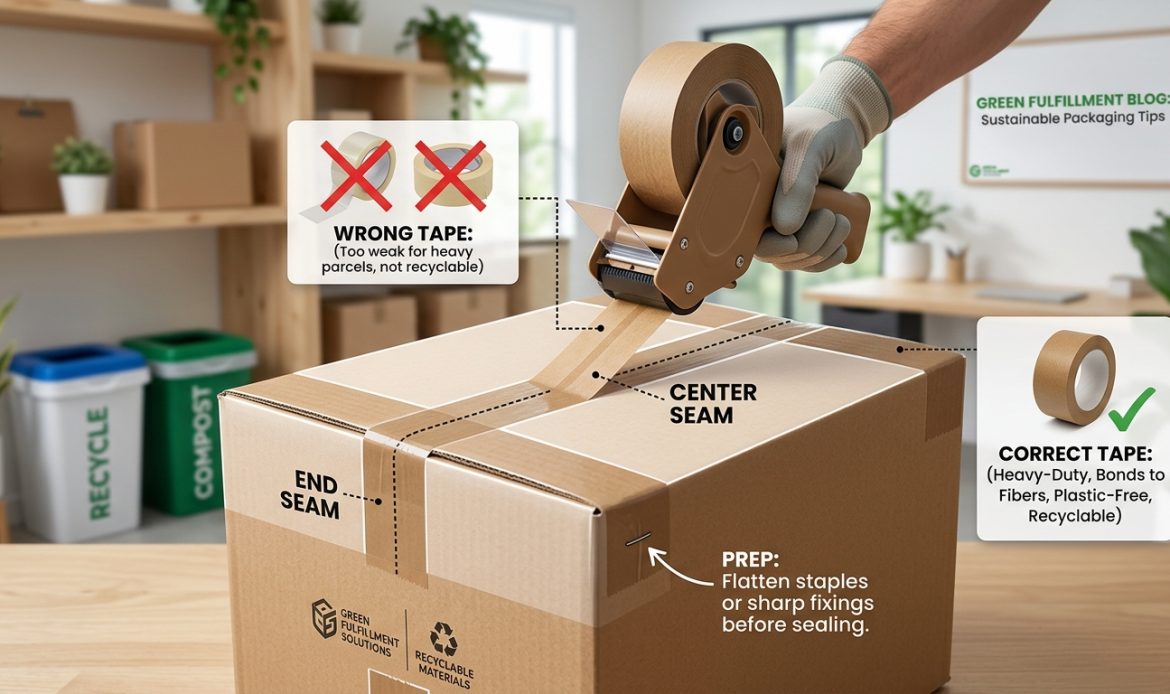
Tape the centre seam along the top and bottom of the box, then tape across both end seams, so the tape forms an H on each face. On heavy parcels, run two or three passes along every seam.
- Use heavy-duty packing tape. Masking tape and office tape won’t hold the weight.
- Reinforced water-activated paper tape is a lower-waste option. It bonds into the fibres of the board and keeps the box plastic-free, which makes it easier for your customer to recycle.
- Flatten or tape over any staples or sharp fixings before you seal.
6. Band the Heaviest Boxes
Strapping around the box adds hold where tape alone can struggle, and gives handlers something to grip. Paper strapping or recycled PET strapping are lower-waste alternatives to virgin plastic banding.
7. Label It as Heavy
Attach the shipping label to the largest flat face, then mark the box as heavy on at least two sides so every handler knows before they lift it. Put a copy of the delivery and return address inside the box as well, in case the outer label gets damaged.
Greener Packing That Holds the Weight
Heavy products are where packaging plans often slip. The instinct is to add more bubble wrap and a bigger box to be safe, which pushes up material use, filler and shipping costs at the same time.
Green packing for heavy items works best when the packaging is chosen to carry the load and sized to the product. Here’s what good sustainable shipping packaging looks like for heavier orders:
| Material | Under heavy loads | Greener swap |
| Bubble wrap | Works, but you need a lot of it | Moulded pulp or fitted paper cushioning |
| Air pillows | Can burst under pressure | Tightly packed kraft or honeycomb paper |
| Polystyrene and packing peanuts | Compress and settle | Corrugated inserts or moulded pulp |
| Plastic tape | Holds, but adds plastic to the box | Reinforced water-activated paper tape |
| Plastic strapping | Holds | Paper or recycled PET strapping |
| Oversized box | Needs more filler and costs more to ship | Right-sized double wall box |
Right-sizing is where the environmental and financial gains line up. A smaller box uses less board and filler, lets more parcels fit into each vehicle and attracts lower size-based charges.
Packaging weight also matters for compliance, since heavier protective packaging adds to the tonnage you may need to report under EPR for packaging.
Packing every SKU to a fixed specification is one of the simplest parts of sustainable fulfilment to put in place, because it stops each packer over-wrapping to be safe.
Parcel or Pallet
Every carrier sets a ceiling on parcel weight and size. Past that point, a heavy consignment is usually cheaper and safer on a pallet.
| Service | Max weight per parcel | Size limits |
| Royal Mail | 20kg | 61 x 46 x 46cm |
| Parcelforce Worldwide (standard services) | 30kg | Up to 1.5m long and 3m length and width combined |
| Other carriers (DPD, Evri, DHL and others) | Varies by service | Check the carrier’s current guide |
Limits change, so check the carrier’s own size and weight guide before booking.
When to Switch to a Pallet
If you’re working out how to ship oversized items or multi-box orders, move to a pallet when:
- a single item is heavier than your carrier’s parcel limit
- a B2B order runs to several heavy boxes going to one address
- you’re sending stock in bulk to a warehouse, retailer or marketplace
- products are awkward or unsafe to carry by hand
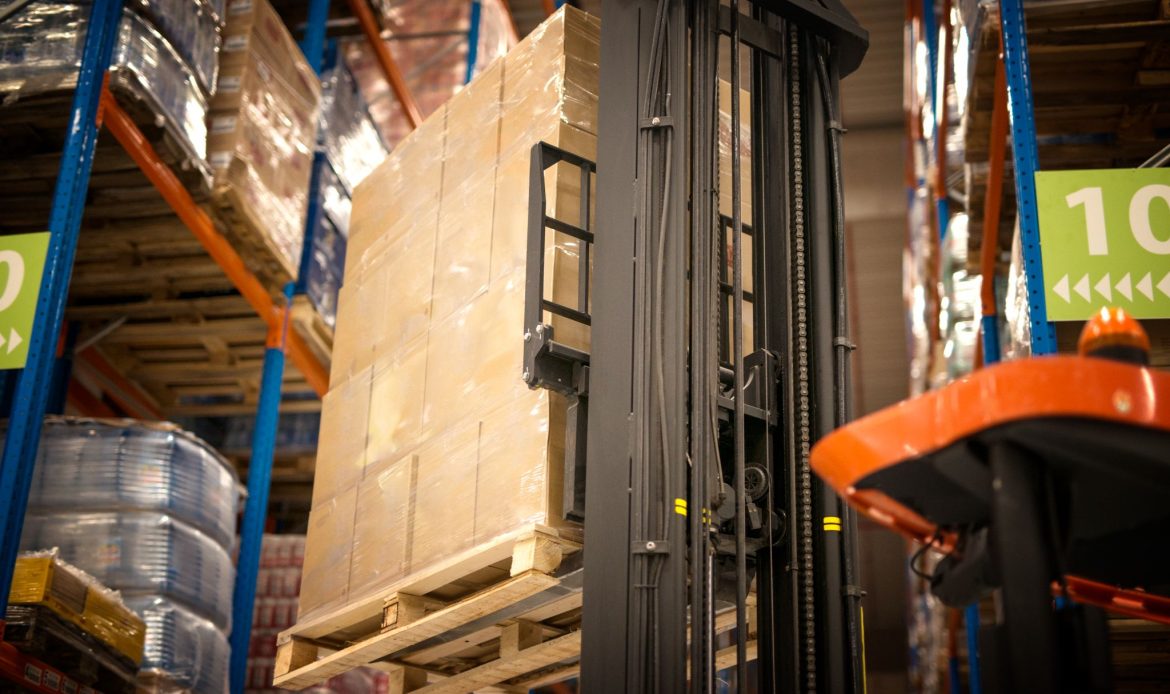
Pallets are moved by forklift and pallet truck rather than by hand, which cuts the number of drops and lifts each box goes through.
Build a Pallet That Arrives Intact
- Pick the right base. UK standard pallets measure 1200 x 1000mm and Euro pallets 1200 x 800mm.
- Stack heavy boxes at the bottom. Build in straight columns so the load passes down through the box walls.
- Keep within the footprint. Nothing should overhang the pallet edge.
- Protect the vertical edges. Fit edge protectors before strapping.
- Band, then wrap. Strap the load to the pallet, then stretch wrap it from the base upwards.
- Label two sides. Handlers should see the label from any approach.
Pooled or reusable pallets and recycled-content stretch film cut the waste from each consignment. Retail and wholesale orders often ship on pallets, so it helps when your B2B order fulfilment runs from the same stock as your online orders.
Stop Paying to Ship Air
Knowing how to ship heavy items cheaply starts with one uncomfortable fact: a good share of what brands overpay is driven by the size of the box.
Know Your Volumetric Weight
Carriers charge on whichever is greater: the actual weight or the volumetric weight. Volumetric weight comes from the box dimensions:
Length x width x height (cm) ÷ divisor = volumetric weight (kg)
Many UK parcel services use a divisor of 5,000, but it varies by carrier and service, so check yours. Here’s the same 8kg product in two boxes:
| Box A | Box B | |
| Dimensions | 60 x 40 x 40cm | 45 x 35 x 30cm |
| Actual weight | 8kg | 8kg |
| Volumetric weight | 19.2kg | 9.45kg |
| Charged as | 19.2kg | 9.45kg |
Same product, same contents, and the smaller box is charged at half the weight.
Ways to Pay Less
- Right-size every box. Measure the packed product, not the product alone.
- Flat-pack where you can. Furniture, stands and frames that can be taken apart ship smaller and travel more safely.
- Test splitting consignments. Two standard parcels can cost less than one oversized parcel. Run both options through your carrier’s calculator.
- Compare carriers by weight band. The cheapest service at 2kg is rarely the cheapest at 25kg, which is why many brands use multi-carrier shipping.
- Check surcharges before you quote. Oversize, irregular-shape and remote-area charges add up quickly. Highlands and Islands deliveries are a common example.
- Price returns into heavy SKUs. Build the likely return cost into your margin now, so you aren’t absorbing it later.
Volume also changes the rate you pay. Carriers offer better terms to shippers sending large numbers of parcels, which is hard for a growing brand to reach alone.
Shipping Heavy Items to the EU
Heavy and bulky products feel the post-Brexit cost of selling into Europe more than most. Each parcel sent from the UK needs customs paperwork, carries a duty and VAT decision, and travels further with more handling along the way.
Before you ship heavy goods to EU customers, have these in place:
- an EORI number
- the correct commodity code for each product
- a commercial invoice with accurate values and weights
- a clear decision on who pays duty and import VAT
Ship in Bulk, Deliver Locally
Sending individual heavy parcels across the Channel means paying cross-border rates, customs handling and long-distance transport on every order. Holding stock in a 3PL fulfilment warehouse inside the EU turns that into one bulk movement on pallets, followed by local deliveries to customers.
That gives you:
- one customs movement per consignment instead of one per order
- shorter final-mile journeys and quicker delivery for EU customers
- fewer handling points per parcel, which lowers the risk of damage
- lower transport emissions per order, because heavy stock travels most of the distance on consolidated pallets
GPSR and Your EU Responsible Person
Many heavy eCommerce products fall under the EU General Product Safety Regulation (GPSR, EU 2023/988), which has applied since 13 December 2024. Homeware, furniture, fitness equipment and pet accessories are all non-food consumer products within its scope.
Under GPSR, a UK brand selling into the EU needs a responsible economic operator based in the EU, usually called an EU Responsible Person. In practice:
- their name and contact details must appear on the product, its packaging or an accompanying document
- the same details must be shown on your online listings, including marketplace listings (GPSR digital labelling)
- if a product raises a safety concern, the Responsible Person handles notifications through the EU Safety Business Gateway and deals with the market surveillance authority, such as the NVWA in the Netherlands
- products need the correct conformity marking for the EU, which for many product types means CE marking rather than UKCA alone
Amazon, eBay and other EU marketplaces check listings for this information, and missing or incorrect details can lead to listings being suppressed until they’re corrected.
Green Fulfilment’s warehouse in Venlo works with a vetted Dutch Responsible Person partner, so GPSR documentation is checked during onboarding and travels with the stock when it crosses the border.

When to Bring in a 3PL
Packing a few heavy orders a week at your own bench is manageable. Once they become a daily task, the pressure tends to show up in the same places:
- packing heavy orders takes hours your team needs elsewhere
- damage claims and returns on heavy products are creeping up
- courier invoices keep arriving with oversize or weight surcharges
- bulky stock is taking over your storage space
- lifting and moving heavy boxes is becoming a safety concern
- EU orders are growing and cross-border costs are eating into margin
3PL fulfilment takes those jobs off your hands. Here’s what that covers for heavier products:
| Job | What it looks like for heavy products |
| Goods-in and storage | Racking and handling equipment set up for bulky, heavy stock |
| Pick and pack | Packing of goods to a fixed specification per SKU, with consistent materials |
| Carrier selection | Choosing the service by weight band and destination, at volume rates |
| Parcels and pallets | D2C parcels and B2B pallets dispatched from one pool of stock |
| Returns | Checking returned items quickly so resaleable stock goes back on sale |
| UK and EU coverage | Stock split across UK and EU warehouses to cut cross-border shipping |
Once the method is in place, heavy products can hold their place in your range without eating into margin every time one ships.
Heavy Item Shipping FAQs
What is the cheapest way to ship heavy items in the UK?
Start with the box. Right-size it to cut volumetric charges, then compare carriers on the true packed weight and dimensions. Test whether two standard parcels cost less than one oversized parcel, and move to a pallet service once you pass parcel limits. At higher order volumes, negotiated carrier rates or a 3PL’s combined volume make the biggest difference.
How much does it cost to send a 20kg parcel?
It depends on the carrier, the service speed, the box dimensions and the destination. A large box can be charged on volumetric weight above 20kg, and remote postcodes or oversize parcels can attract surcharges. Enter the packed weight and dimensions into each carrier’s online calculator to compare current prices before you book.
What is the maximum parcel weight in the UK?
Royal Mail accepts parcels up to 20kg, with a maximum size of 61 x 46 x 46cm. Parcelforce Worldwide takes parcels up to 30kg on its standard services. Other carriers set their own limits by service, so check before booking. Anything heavier than your carrier’s limit usually travels more safely and cheaply on a pallet.
What is the best packing material for heavy items?
Dense cushioning that holds its shape under load works best. Corrugated inserts, moulded pulp and tightly packed kraft or honeycomb paper are strong, lower-waste choices, with fitted foam for delicate parts. Avoid crumpled newspaper, loose packing peanuts and air pillows, which flatten, settle or burst under the weight of a heavy product.
Do I need an EU Responsible Person to sell in the EU?
In most cases, yes. Under GPSR (EU 2023/988), non-food consumer products sold into the EU by a UK business need a responsible economic operator based in the EU. Their details must appear on the product, packaging or accompanying documents, and on your online listings, including marketplaces such as Amazon and eBay.