
Packaging is the first physical thing a customer touches. Every other brand interaction before that point has been digital: a screen, a scroll, an ad. Then a box lands on a doorstep, and that is where perception solidifies.
Yet for many eCommerce businesses, packaging decisions get made last, with leftover budget and minimal thought. The result is packaging that neither represents the brand nor reflects its values.
Consumer expectations have shifted considerably. According to Macfarlane Packaging’s 2024 Unboxing Survey, 76% of UK consumers now expect online shopping deliveries to be sustainably packaged as standard, up from 47% in 2023. That is not a niche concern held by a small segment of eco-conscious shoppers. It is the majority expectation, and it continues to grow.
Green printing solutions and sustainable packaging materials have matured to the point where brands no longer have to trade presentation for principles.
Why Eco-Friendly Packaging Is Now a Brand Decision, Not Just a Green One
The shift toward sustainable branded packaging is partly driven by consumer values, but the commercial case has become equally hard to ignore.
What the data shows
| Metric | Stat | Source |
| UK consumers expecting sustainable packaging as standard | 76% (up from 47% in 2023) | Macfarlane Packaging Unboxing Survey, 2024 |
| Consumers who would boycott a retailer for unsustainable packaging | 21% | Macfarlane Packaging, 2024 |
| Shoppers more likely to repeat purchase from a brand using branded packaging | 56% | Macfarlane Packaging, 2024 |
| Consumers who have switched to a competitor for more sustainable packaging | 1 in 3 | Shorr Sustainable Packaging Consumer Report, 2025 |
| Consumers who prefer cardboard over plastic packaging | 87.1% | Procarton, 2024 |
The regulatory tailwind
Beyond consumer sentiment, there is a growing regulatory dimension that makes sustainable packaging a financial matter as well as an environmental one.
- UK Plastic Packaging Tax (updated April 2025): applies to plastic packaging manufactured in or imported into the UK that contains less than 30% recycled content
- Extended Producer Responsibility (EPR): tightening compliance requirements mean brands are increasingly responsible for the end-of-life cost of the packaging they put into the market
- Brands still using non-recyclable materials are carrying a growing compliance cost on top of the environmental one
For brands already working with environmentally friendly printing companies for marketing materials such as business cards, flyers, and branded inserts, extending that thinking to packaging is a logical and overdue step.
What Green Printing Actually Means for eCommerce Packaging
The phrase “eco-friendly printing” tends to conjure images of recycled leaflets or carbon-offset business cards. Applied to eCommerce packaging, it covers far more: the box itself, the print on it, the labels, the tape, and everything inside.
Here is how green print solutions apply across each component.
Boxes and outer packaging
FSC-certified corrugated cardboard
FSC (Forest Stewardship Council) certification confirms the board comes from responsibly managed forests. Key attributes:
- Kerbside recyclable
- Structurally reliable for transit
- Increasingly perceived as a quality signal rather than a budget material
Kraft paper mailers
Lighter than corrugated boxes, recyclable, and well suited to fashion, apparel, beauty, and smaller product categories, though heavier ranges need sturdier pet product packaging to survive transit. Many UK brands in these sectors have moved away from polythene mailers entirely.
Biodegradable packaging
Compostable mailers made from plant-based materials such as cornstarch or PLA (polylactic acid) break down under composting conditions. They are particularly popular in beauty and wellness. One practical note: composting infrastructure varies across the UK, so clear end-of-life instructions on any compostable packaging are worth including.
Right-sized boxes
The packaging footprint of an order is not just about what the box is made from. It is also about how much material is used. Oversized boxes:
- Require more void fill
- Cost more to ship due to dimensional weight pricing
- Signal wastefulness to customers on opening
Reviewing SKU dimensions and matching box sizes accordingly is one of the highest-impact changes a brand can make, and it typically reduces costs at the same time.
Green printing on packaging: inks, labels, and tape
This is the part of eco-friendly printing that most eCommerce brands overlook: the print itself.
Plant-based inks
Vegetable or water-based formulations replace petroleum-derived solvent inks. The practical benefits:
- Lower VOC (volatile organic compound) emissions during production
- Easier to de-ink during paper recycling, which improves recyclability of the finished packaging
- No meaningful compromise on colour vibrancy or print quality
Leading green printing UK companies, including Solopress, use vegetable-based inks as standard alongside 100% recycled paper stocks and carbon offsetting.
Uncoated and minimal-ink finishes
Packaging with less ink coverage and no plastic coating is easier to recycle. It is also increasingly associated by consumers with a considered, premium aesthetic rather than a cheap one.
Biodegradable labels
Water-activated kraft adhesive replaces polypropylene. Benefits:
- Kerbside recyclable alongside the box they are applied to
- Removes a hidden source of non-recyclable material from an otherwise eco packaging setup
Paper-based tape
One of the easiest swaps in green packaging design for eCommerce. Paper tape:
- Replaces plastic packaging tape
- Is fully recyclable at kerbside
- Is now available with custom printing for brand visibility
What to ask a green printing company or sustainable print supplier
Before briefing any supplier on eco packaging print, confirm the following:
- Ink type: vegetable or water-based?
- Paper or board certification: FSC or equivalent?
- Is production carbon offset?
- Are any coatings applied plastic-free?
Branded inserts and inner packaging
The inside of the box is often where the brand experience is made or lost, and where packaging waste quietly accumulates.
| Element | Eco alternative | Benefit |
| Printed instruction guides | QR code on a single insert card | Reduces paper use; no loss of information |
| Air pillows / polystyrene | Paper void fill or honeycomb kraft wrap | Kerbside recyclable; better unboxing presentation |
| Plastic inner wrapping | Tissue paper on recycled stock | Branded, tactile, plastic-free |
| Poly mailers | Recyclable peel-and-seal mailers | Designed for easy opening and returns reuse |
| Standard insert card | Recycled or uncoated stock with green printed branding | Same visual impact; significantly lower footprint |
Uncoated recycled stock, used well, can look distinctive and premium. The assumption that eco materials look cheap is largely outdated.

The Eco Unboxing Experience: What the Evidence Shows
The concern most brands raise is that moving to sustainable packaging means a less premium customer experience. The evidence points the other way.
Branding and sustainability are now expected together
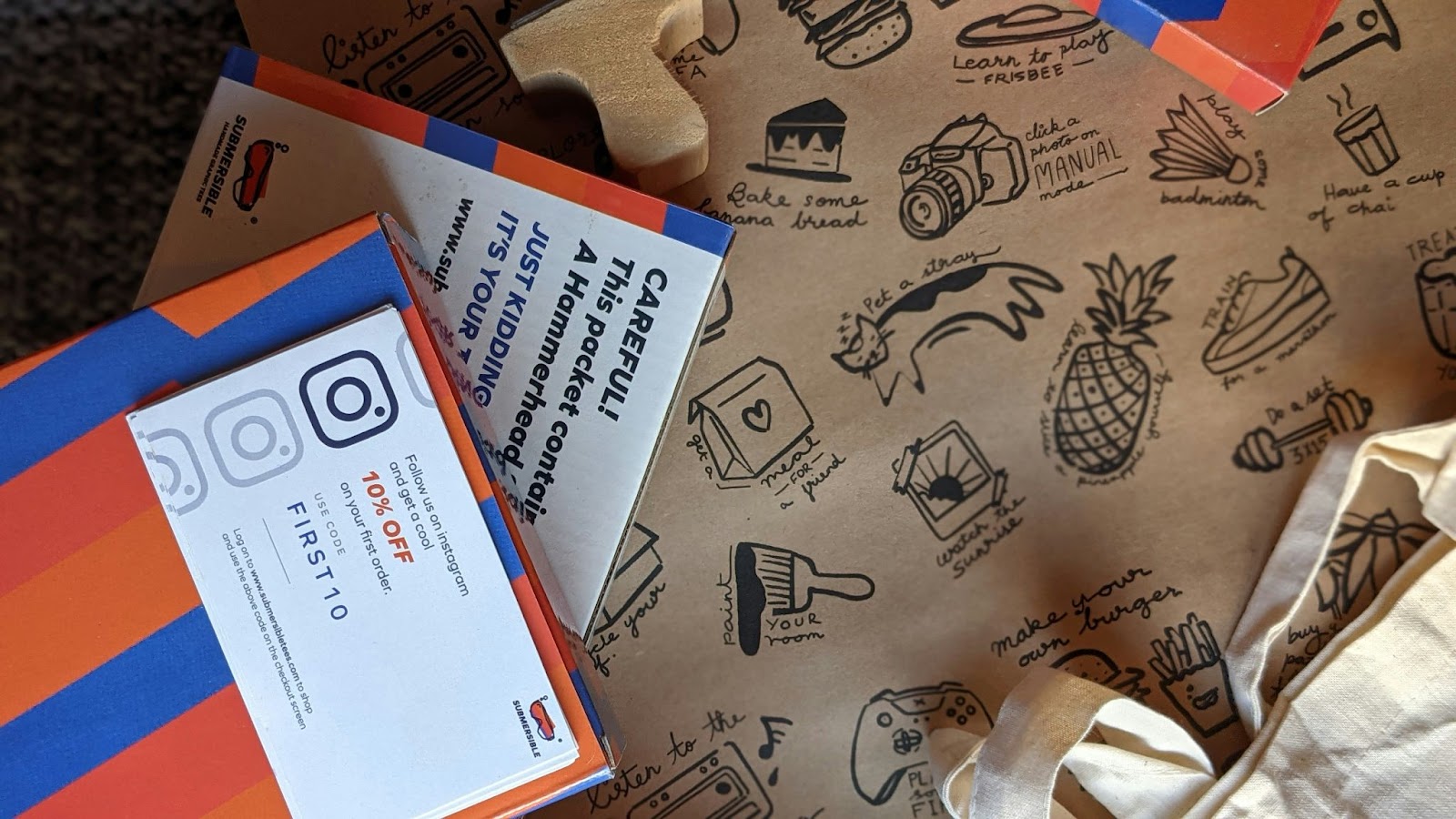
In 2016, only 39% of eCommerce packaging was branded. By the most recent Macfarlane survey, 59% of packages featured logos and printed elements. The direction of travel is clear: branded packaging has become standard practice, and the opportunity now is to make that branding green printed rather than conventional.
Brands like Lush and Neal’s Yard Remedies have built significant brand equity through packaging that is visibly sustainable: no plastic, minimal print, materials that communicate care without overstating it. Their approach shows that green packaging design for eCommerce can be distinctive.
The commercial value of the unboxing moment
- An estimated 62% of unboxing video viewers are researching the product with intent to purchase (Internet Retailing)
- Packaging that photographs well and signals sustainability has genuine organic marketing value
- Customers who value sustainability are more likely to share packaging they feel represents their values
Closing the values gap
A consistent finding in consumer research is that eco-conscious customers notice when a brand’s packaging contradicts its stated values. Plastic-heavy packaging arriving from a brand that markets itself as sustainable creates distrust. Packaging is one of the few places in the customer journey where a brand can make its values concrete and verifiable.
Where Fulfilment Fits In
Choosing the right materials and working with a sustainable green printing supplier is necessary, but it is not the whole picture. Those materials need to be handled correctly through the pick and pack process, at scale, on every order.
A 3PL controls how packaging is selected, sized, and applied across potentially thousands of orders a month. Even a brand that has invested in FSC-certified boxes, vegetable-ink printing, and paper void fill can find that investment undermined if the fulfilment partner:
- Defaults to oversized boxes rather than right-sizing per SKU
- Uses polystyrene void fill as standard
- Cannot accommodate branded insert inclusion
- Adds layers of printed documentation to every order
Questions to ask any fulfilment partner
Before handing over packaging responsibility, confirm the following:
- Can they accommodate custom or branded eco packaging, including specific materials, approved box sizes, and insert inclusion?
- Do they have processes to prevent oversizing, packing each order in the most appropriate box?
- Do they operate paperlessly, or is printed documentation being added to every order?
- Can they source or handle biodegradable packaging materials if required?
- Do they have documented sustainability practices covering waste management and recycling within the warehouse?
Green Fulfilment’s Green Print programme addresses these questions directly, covering recyclable materials, paperless dispatch, energy-efficient warehousing, and waste reduction across its UK and EU fulfilment centres. The fulfilment partner’s own sustainability commitment is as important as the packaging specification itself.

A Practical Starting Point for Brands Ready to Make the Switch
Switching to sustainable branded packaging does not have to happen all at once. The brands that do it most effectively tend to start with the highest-volume, highest-visibility elements and build from there.
Step 1: Audit what you currently use
List every packaging component: outer box or mailer, void fill, labels, tape, inserts, inner wrapping. Note the material for each and whether it is recyclable, recycled, or neither.
Step 2: Make the low-cost swaps first
- Replace plastic tape with paper-based tape
- Switch polystyrene or air pillow void fill to paper alternatives
- Move inserts to recycled or uncoated stock with a green printing UK supplier
Step 3: Brief your fulfilment partner
Confirm they can source and handle your preferred materials, maintain your packaging specifications consistently, and right-size packaging across your SKU range. Green Fulfilment’s sustainable fulfilment services give a clear picture of what an eco-committed 3PL looks like in practice.
Step 4: Address outer packaging
Move outer boxes or mailers to FSC-certified or kraft alternatives. Use a green printing company for any custom print and confirm ink type and carbon offset status before placing an order.
Step 5: Communicate it to customers
Recycling instructions on the box, a QR code linking to a recycling guide, or a short note on the insert all reinforce the brand’s commitment without requiring significant additional print or cost.
Step 6: Check certifications and compliance
- FSC certification for paper and board
- Compostable certification (TÜV Austria is widely recognised in the UK)
- Plastic Packaging Tax compliance review
- EPR registration if applicable
All four provide third-party credibility for sustainability claims, which matters to customers who are used to seeing greenwashing.
Frequently Asked Questions
What is eco-friendly printing for eCommerce packaging?
Eco-friendly printing uses plant-based or water-based inks, FSC-certified or recycled paper stocks, and carbon-offset production processes. Applied to eCommerce packaging, it covers boxes, mailers, labels, tape, and branded inserts, reducing the environmental impact of every parcel dispatched without compromising on print quality or brand presentation.
What are plant-based inks and why do they matter?
Plant-based inks are made from vegetable oils or water-based formulations rather than petroleum-derived solvents. They produce lower VOC emissions during production and are easier to de-ink during paper recycling, improving the overall recyclability of the finished packaging. Leading green printing companies in the UK use them as standard, with no meaningful difference in print quality or vibrancy.
Does sustainable branded packaging cost more?
Not necessarily, and often less. Right-sizing boxes, replacing plastic void fill with paper alternatives, and moving to recycled insert stock frequently reduce material and shipping costs. Any premium on certified materials is typically offset by savings elsewhere in the process.
What is FSC-certified packaging?
FSC (Forest Stewardship Council) certification confirms the paper or board used in packaging comes from responsibly managed forests. It is one of the most widely recognised sustainability credentials for packaging and print materials, and it gives customers verifiable reassurance.
How does my fulfilment partner affect my packaging footprint?
Substantially. Your 3PL controls how packaging is selected, sized, and applied across every order. A fulfilment partner with strong eco practices, including the ability to accommodate branded eco specifications, a commitment to right-sizing, and paperless warehouse operations, supports your sustainability goals at scale.
What is the UK Plastic Packaging Tax and does it affect eCommerce brands?
The UK Plastic Packaging Tax applies to plastic packaging manufactured in or imported into the UK that contains less than 30% recycled plastic content, updated in April 2025. eCommerce brands using plastic mailers, polythene void fill, or polypropylene tape with less than 30% recycled content may be subject to the tax. Switching to eco-friendly dunnage and other paper-based alternatives removes this liability, and lowers the rate paid per tonne under packaging EPR.