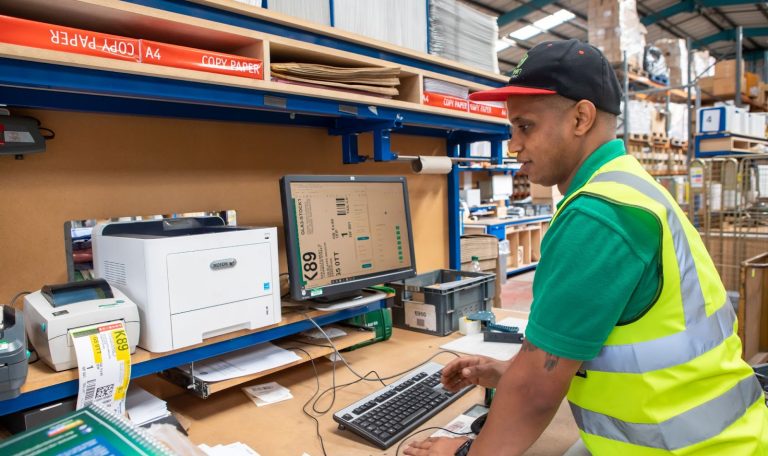


Shoppers no longer separate online from offline. Someone might find a product on social media, compare options on their phone, walk into a shop to see it in person, then finish the purchase later at home. The journey moves back and forth, and most people do not stop to think about which channel they are using at any given moment.
Phygital retail is the response to that behaviour. It is the integration of physical and digital retail into one connected customer experience, using tools like QR codes, augmented reality and mobile apps to make the two work as one. This guide covers what phygital retail means, why it matters now, the strategies and real-world examples worth knowing, and the part most articles skip: what actually makes it work behind the scenes, in your stock and your fulfilment.
What is Phygital Retail?
Phygital is a blend of two words, physical and digital. Phygital retail is the point where in-store and online shopping stop being separate experiences and start working as one connected journey.
The idea is to combine the strengths of each. Physical retail lets people see, touch and try a product and walk away with it the same day. Digital retail gives them speed, choice, reviews and the convenience of buying from the sofa. Phygital joins the two so a customer can use whichever suits them at each step.
Here is the idea in action: a customer browses a jacket in-store, scans a QR code on the tag to check stock, reads a few reviews on their phone, then orders their size for home delivery because the shop has sold out. Three steps, two worlds, one purchase.
How phygital differs from omnichannel and multichannel
These terms get used interchangeably, but they describe different things, and the distinction matters when you are planning.
- Multichannel simply means selling in more than one place: a website, a shop, a marketplace, a social channel. The channels exist, but they often run separately.
- Omnichannel joins those channels so the brand experience stays consistent across all of them, with shared pricing, promotions and customer service wherever the customer shops.
- Phygital is narrower and more specific. It focuses on the moments where physical and digital actually meet in the customer’s hands: the AR mirror in the changing room, the QR code on the shelf, the app that checks stock while you stand in the aisle.
- Unified commerce sits underneath all of this. It is the back-end integration, a single system holding inventory, orders and customer data in real time, that makes phygital possible at scale.
Put simply, phygital is the customer-facing blend of physical and digital. It usually sits inside an omnichannel strategy, and it depends on unified commerce to function.
Why does phygital retail matter now?
The shift towards phygital is being driven by how people already behave, not by retailers pushing technology for its own sake. A few forces are pulling in the same direction.
Customers expect both convenience and experience
Online shopping is stronger than ever, yet the physical shop has not gone away. Its job has changed: it is becoming a place to experience products, get advice and collect orders, rather than only a place to transact. Shoppers want digital convenience and physical trust in the same journey. When a brand joins the two, the experience feels smooth. When it does not, customers notice the gap immediately.
Hybrid shopping is already the norm in the UK
The UK is one of the most developed eCommerce markets in the world, and hybrid behaviour is now standard rather than niche. Two figures show how routinely customers mix the two:
- Click-and-collect already accounts for close to 40% of online orders in the UK.
- eCommerce keeps taking a rising share of total retail, while most sales still happen in or around physical stores.
That mix, online and offline feeding each other, is exactly the territory phygital is built for.
Younger shoppers expect it
Gen Z, the most digital generation so far, has not abandoned physical shops. Many still shop in-store regularly and routinely research a product online before buying it in person, or the other way round. This group tends to expect interactive tools, app-linked rewards and a strong connection with the brands they buy from, and phygital features are a large part of how that connection gets built.
It addresses real commercial problems
Phygital is not only about a nicer customer experience. Done well, it tackles problems that cost retailers money:
- Returns. Virtual try-on and better product information help customers judge fit, size or shade before buying, which brings return rates down.
- Stockouts. Shared stock visibility recovers sales that would otherwise be lost when one channel runs out.
- Failed deliveries. Flexible options like click-and-collect cut the cost of missed or returned deliveries.
Phygital retail examples
The clearest way to understand phygital retail is to look at what it already looks like in practice. Most of these will be familiar, which is rather the point: phygital is less a future concept than a description of how good retailers already operate. The examples below are grouped by the type of strategy they represent.
Click-and-collect and flexible fulfilment
Click-and-collect, also called buy online pick up in-store (BOPIS), is the most widely adopted phygital model in the UK. The customer orders online and collects in person, pairing online convenience with same-day immediacy and saving the delivery cost. Variations include curbside pickup, buy-in-store with home delivery for bulky items, and ship-from-store, where a shop fulfils a nearby online order faster than a central warehouse could.
Virtual try-on and AR
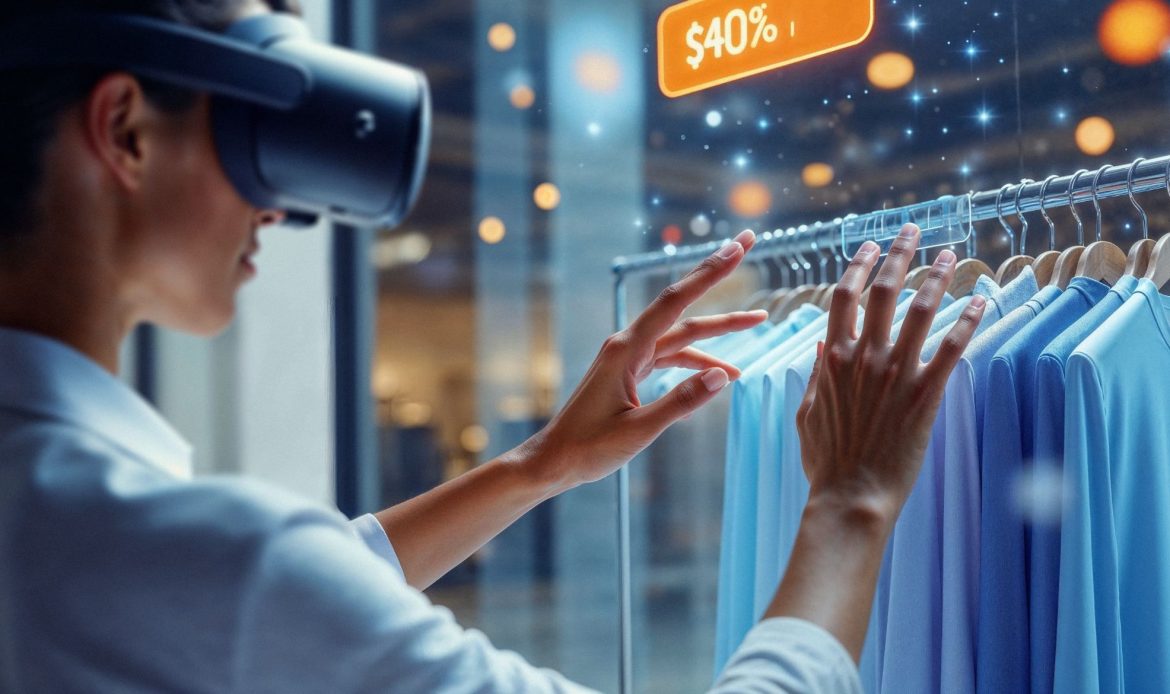
Augmented reality lets shoppers try products through a phone camera or an in-store screen before they commit.
- Eyewear: Warby Parker built virtual try-on into its app so customers can see how frames look on their face without visiting a shop.
- Beauty: Sephora’s Virtual Artist app lets customers try makeup shades virtually using AR, then buy for delivery or in-store collection.
- Furniture: IKEA Place, and AR tools from UK retailers such as Made.com and Dunelm, let shoppers place a sofa or table in their own room to check scale and fit before buying.
The common thread is reducing uncertainty. When someone can judge fit, shade or scale in advance, they buy with more confidence and send fewer items back.
Smart mirrors and in-store screens
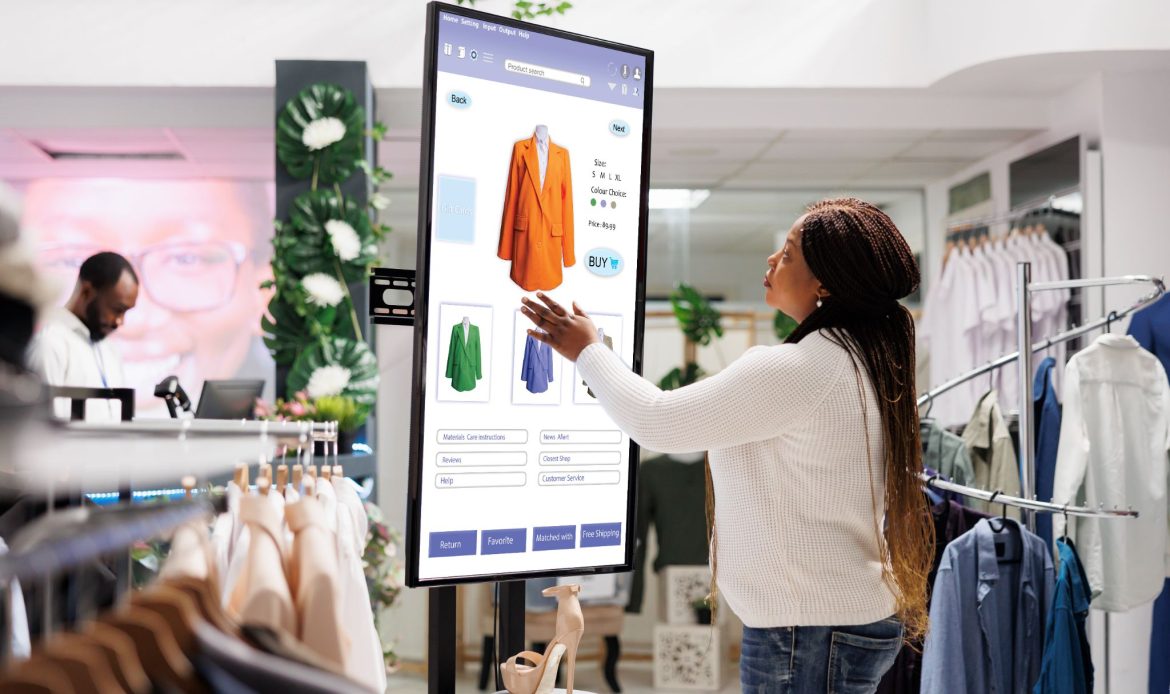
Smart mirrors bring the try-on idea into the shop itself. UK beauty retailers including Boots and Space NK have used mirrors that let customers test makeup virtually, which is more hygienic and lets shoppers try far more products than they could in person. In fashion, smart mirrors and in-store kiosks support endless-aisle ordering, so a customer can buy a size or colour the shop does not physically hold and have it shipped to their home.
Scan-and-go and cashier-free checkout
Store apps and mobile payment let customers scan items as they shop and skip the till. Amazon Fresh took this furthest with sensor-based stores where shoppers pick up items and simply leave, with the app charging their account automatically. The wider trend, mobile payment and self-checkout, is now common across UK grocery and convenience retail.
QR codes and connected packaging
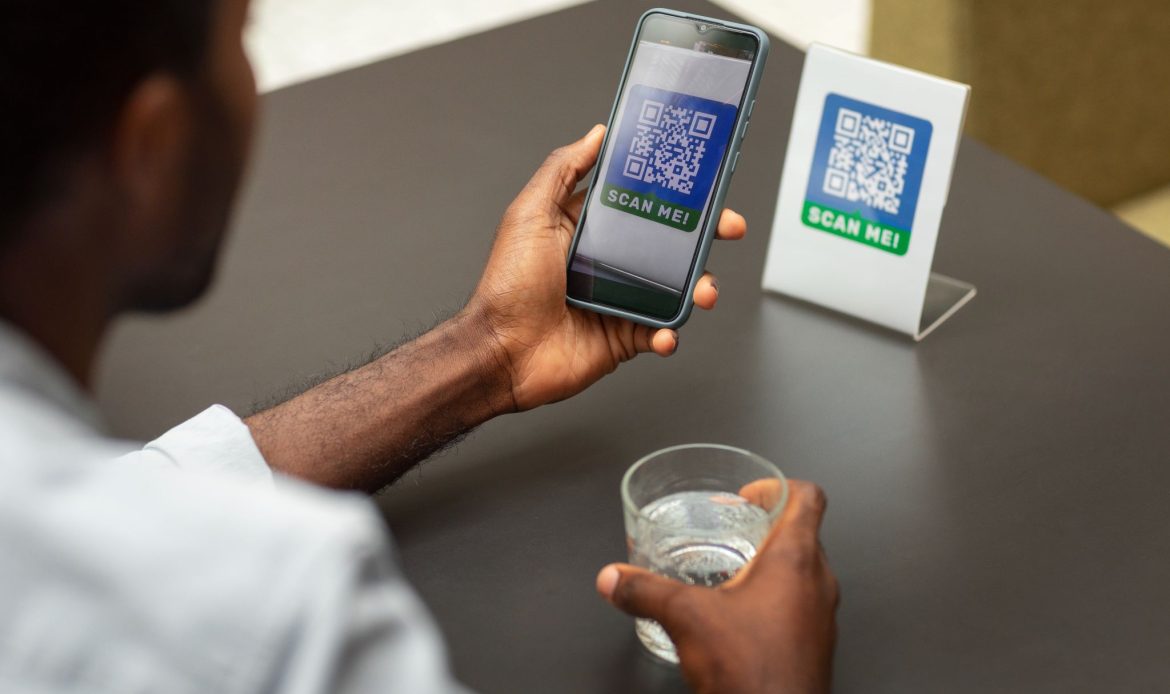
A QR code on a shelf tag or product label can open up stock levels, product origin, styling advice, ingredient stories or reviews while the customer is still holding the item. UK convenience group Nisa has used AR-based barcode scanning to drive loyalty redemptions, and brands increasingly use QR codes for digital receipts and eco-labelling so customers can check a product’s origin or recyclability on the spot.
Mobile apps and connected loyalty
The phone is the thread tying most phygital experiences together. Retailers such as Marks & Spencer and John Lewis link their apps directly to loyalty points, personalised offers and stock checks, so the relationship with the customer continues well beyond a single shop visit. A connected app can check local stock, hold a reservation, apply a digital coupon and store purchase history that shapes the next recommendation.
Pop-up stores for online-first brands
Phygital does not require a permanent shop. Online-first brands use pop-up stores to give customers a physical touchpoint, test a new market, and drive online sales afterwards. A pop-up with tablets for browsing the full range, in-store reviews and app-based checkout is a phygital setup in miniature, and a low-commitment way to bridge into physical retail.
Phygital retail strategies for eCommerce brands
Knowing the examples is one thing. Building a phygital approach that holds together is another. These strategies tend to separate the retailers who make it work from the ones who bolt on a gimmick.
- Connect online and in-store inventory into one view. Every phygital feature depends on accurate, shared stock data. Without it, click-and-collect oversells and endless-aisle orders fail at the worst possible moment.
- Use first-party data to personalise across touchpoints. Online browsing and purchase history can shape in-store recommendations and offers, and in-store behaviour can sharpen online targeting, as long as the data is joined up and handled responsibly.
- Offer genuinely flexible fulfilment. Click-and-collect, ship-from-store and buy-in-store-deliver-home all give customers choice. Each one is a different path the same product can take to reach the same person.
- Bring digital into the physical space where it helps. QR codes, AR and kiosks add information and convenience inside the shop, but only where they make the visit easier rather than more complicated. Intrusive tech slows adoption.
- Make returns work across channels. Customers expect to return an online order in-store, or send back an in-store purchase by post. Allowing it is a feature. Processing it cleanly, and getting the stock back on sale quickly, is the hard part.
- Start small, then scale. The technology takes investment and integration. Piloting one feature in a few locations, measuring uptake and conversion, then expanding, beats a costly all-at-once rollout that no one is ready to support.
The difference between a strategy that works and one that frustrates customers usually comes down to the operational requirement sitting behind each feature, not the feature itself.
The inventory and fulfilment challenge behind phygital
This is the part many guides gesture at and rarely solve. Phygital multiplies the number of fulfilment paths a single product can take. One SKU might reach a customer through any of these routes:
- An order placed on the website and shipped to their home
- A purchase made in a physical shop
- An order through a marketplace such as Amazon or eBay
- An item reserved online and collected in store
- A shop sale fulfilled from another location when the local stock has run out
Each path draws on the same pool of stock and if the system cannot see what is sitting where in real time, the cracks show fast: overselling, stockouts, and orders the brand cannot actually fulfil.
Two things have to hold together to prevent that:
- Real-time stock visibility. A single source of truth for inventory, rather than separate counts for online and offline, is what lets a brand promise click-and-collect or endless-aisle ordering and then deliver on it.
- Returns that work across channels. A phygital brand has to handle items bought online and returned in store, and items bought in store and returned by post, then triage, restock and reflect each one back in the live stock figure quickly. Slow or disconnected returns handling undoes much of the convenience phygital is meant to create, and it ties up stock that could be back on sale and earning.
This is where the right fulfilment partner earns its place. A 3PL such as Green Fulfilment, which manages D2C and B2B stock from a single platform with real-time inventory and returns handling, gives a brand the cross-channel view phygital depends on, so the customer-facing experience stays smooth because the operation behind it is joined up.
The benefits and trade-offs of going phygital
Phygital retail is worth doing, but it is not free or simple, and an honest view helps with planning.
The benefits of phygital retail include:
- Wider reach. Customers can engage with the brand from anywhere and buy in whatever way suits them, extending reach beyond a single storefront.
- Richer customer data. Joined-up touchpoints generate a fuller picture of how customers behave, which sharpens product, marketing and stock decisions.
- Stronger loyalty. Useful, personal experiences bring customers back, and connected loyalty programmes keep the relationship going between visits.
- Fewer returns and stockouts. Better pre-purchase information and shared inventory cut two of the most expensive problems in retail.
- Smoother journeys. Customers move between online and offline without friction, which lifts satisfaction at the moments that decide a sale.
Some limitations of phygital retail:
- Technology investment and integration. A half-connected system can be worse than none. The tools need to talk to each other, which takes planning and budget.
- Data privacy obligations. Collecting data across physical and digital touchpoints brings responsibilities under data protection rules. Transparency and opt-in consent are not optional.
- An ongoing operational lift. Keeping channels genuinely in sync is a continuous job, not a one-off project, and it puts real pressure on stock accuracy and fulfilment.
None of this should put a growing brand off. It should shape the order things are done in: prove the foundation works, then add features on top of it.
Is phygital retail the future of retail and eCommerce?
The honest answer is that phygital is less a prediction than a description of how customers already shop. People move between online and offline without thinking about it, and they expect retailers to keep up. In the UK in 2026, that is fast becoming a baseline expectation rather than a point of difference.
What is not guaranteed is that any given brand will do it well. The retailers that succeed treat phygital as an operational question as much as a creative one, building on a foundation where stock, orders and returns stay accurate across every channel. The front-end technology will keep developing, but it only works when the fulfilment underneath it can keep pace.
For eCommerce brands, the practical takeaway is simple: get the inventory and fulfilment foundation right first, then add the phygital features your customers will actually use.
Frequently asked questions
What is phygital in retail?
Phygital retail is the integration of physical and digital shopping into one connected experience, using tools like QR codes, AR and mobile apps so in-store and online work together rather than separately.
How does phygital retail work?
It links physical touchpoints, such as a shop or a product in hand, with digital ones, such as an app, a QR code or online checkout, so a customer can move between them in a single journey. Behind the scenes it relies on shared, real-time inventory and connected fulfilment to keep stock and orders accurate across channels.
What does phygital really mean?
Phygital combines the words physical and digital. It describes experiences where the two are blended together, rather than a customer using one channel or the other in isolation.
What are examples of phygital retail?
Common examples include click-and-collect, virtual try-on through AR, smart mirrors, scan-and-go app checkout, QR codes on shelf tags linking to stock or reviews, connected loyalty apps, and pop-up stores for online-first brands.
What is the difference between phygital and omnichannel?
Omnichannel is the broader strategy of joining all sales channels into a consistent experience. Phygital is the specific point where physical and digital meet in the customer’s hands. Phygital sits inside an omnichannel approach and relies on unified commerce to work.
Do you need a physical store to go phygital?
No. Online-first brands can use pop-up stores, retail partnerships or shared retail space to create physical touchpoints without committing to a permanent shop, then connect those touchpoints to their online operation.