
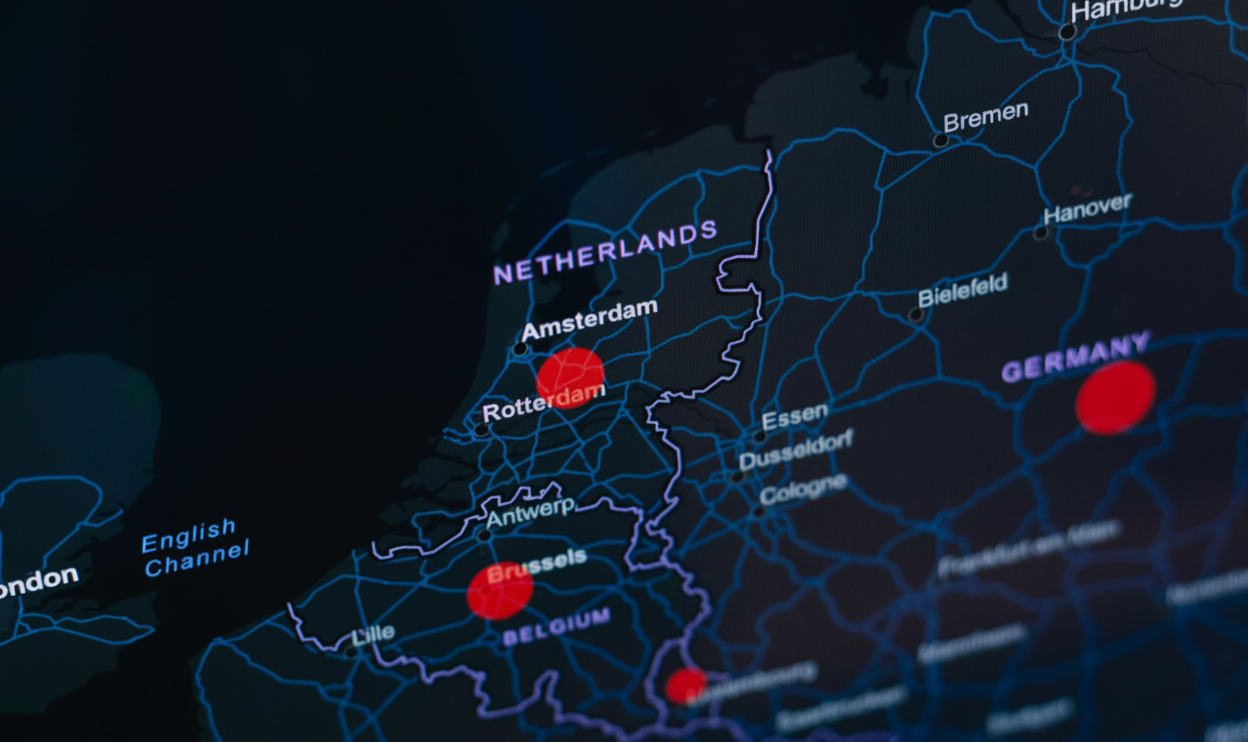
Mega distribution centres across Germany, the Netherlands, and Belgium jumped by approximately 60% between 2018 and 2019 compared to 2015-2017. The Netherlands alone doubled its count, going from around 30 to 60 facilities in that window.
That surge hasn’t stopped.
Vacancy rates across Benelux logistics real estate now sit below 5%, prime rental prices continue climbing, and brands are competing for space in modern facilities. The numbers show how eCommerce demand, strategic geography, and sustainability requirements are reshaping where European fulfilment happens.
Here’s what’s driving the increase in Benelux fulfilment centres and why this trend matters for brands comparing EU warehouse locations across Europe.
Europe’s Logistics Sweet Spot
The Benelux region offers something few other European locations can match: direct access to major consumer markets within 24 hours.
A fulfilment centre in the Netherlands or Belgium can reach:
- The UK in 1-2 days
- France within 24 hours
- Germany overnight
- Scandinavia in 1-2 days
The region’s advantage goes beyond geography, backed by world-class logistics infrastructure:
Port of Rotterdam: Europe’s largest seaport handled 13.4 million TEU in 2023.
Port of Antwerp-Bruges: A major gateway for UK and European trade.
Amsterdam Schiphol and Brussels airports: Critical for air freight and express delivery.
Multimodal networks: Road, rail, and inland waterways combine to reduce congestion and improve transit times across the continent.
The DHL Global Connectedness Index 2022 ranked the Netherlands first globally and Belgium third for trade, capital, and information flows. That measurable connectivity translates directly into faster, more reliable delivery for customers.
Post-Brexit, this positioning matters even more. UK brands holding stock in the EU eliminate customs friction, speed up delivery, and improve the customer experience across European markets.
eCommerce Keeps Growing
While pandemic-era spikes have normalised, absolute order volumes remain high and continue growing.
The Netherlands: Dutch consumers spent €34.7 billion online in 2023, up 3% year-on-year across 365 million purchases.
Belgium: eCommerce turnover reached €17.4 billion in 2024 and is projected to hit €24 billion in 2025.
Both figures far exceed the European average growth rate.
Brands aren’t just selling more online. They’re promising next-day and same-day delivery options that only proper fulfilment infrastructure can support. Urban logistics centres designed for last-mile delivery are now essential, not optional, particularly around high-density population areas like Amsterdam, Brussels, and Antwerp.
Cross-border eCommerce adds another layer. Brands serving multiple EU markets need centralised inventory management to avoid the complexity and cost of holding stock in six different countries.

The Flight to Quality
Growing demand is concentrating on modern, energy-efficient facilities that can support automation and meet sustainability standards.
Occupiers are prioritising:
- Solar panels and renewable energy contracts
- LED lighting and heat pump systems
- Automation-ready layouts for goods-to-person systems and autonomous mobile robots
- High-spec loading capacity and clear floor heights for efficient operations
Older, less efficient buildings are being bypassed. This “flight to quality” reflects a practical reality: tech-enabled picking and packing can improve accuracy rates to 99%+ while managing labour costs in tight markets.
Automation makes economic sense at scale. Operations handling thousands of daily orders see strong ROI from RF scanning, RFID tracking, and automated picking systems. Smaller operations may not need full automation, but they benefit from modern facilities designed to scale.
Sustainability Drives Location Decisions
Network centrality reduces transport emissions. Centralising stock in Benelux cuts average delivery kilometres compared to holding inventory across multiple countries.
Many new Benelux distribution centres feature:
- Paperless dispatch systems
- Recyclable packaging materials
- Renewable electricity supplies
- Efficient returns processing to enable refurbishment and resale
These sustainable fulfilment features improve operational efficiency while reducing environmental impact. A UK-based wellness brand shipping 10,000 monthly orders across the UK, Netherlands, Germany, and France can reduce average delivery distance by 28% by moving from UK-only stock to a Dutch primary distribution centre with carrier partnerships in each market.
Returns logistics at scale matter too. Centralised hubs process returns faster, reducing waste and improving customer satisfaction in sectors like fashion, where return rates run high.
The Constraints Are Real
High demand meets limited supply. Land scarcity, power grid capacity, and environmental regulations all constrain new development.
Land availability: Prime logistics corridors around Rotterdam and Amsterdam face limited plots and long permitting lead times.
Grid connections: New large facilities queue for electricity capacity as demand rises across industries.
Labour costs: Wage pressure in tight markets affects operational budgets, particularly for skilled warehouse roles.
Vacancy rates below 5% signal a supply shortage that’s pushing rental prices up and making site selection more competitive.
Brands are responding with hybrid models:
- Benelux primary distribution centre for EU orders
- UK or German-speaking locations for market-specific volume
- Carrier partnerships to extend reach without capital investment
Phased transitions help test demand before committing to long-term space. This approach balances network efficiency with operational flexibility.
What UK Brands Should Consider
A Benelux fulfilment centre typically makes sense for brands shipping 500+ monthly orders to EU customers who need 1-2 day delivery across multiple markets.
Readiness checklist:
- Forecast EU order volumes by country
- Calculate landed cost: storage, pick and pack, linehaul to each market
- Assess returns handling requirements
- Evaluate whether a centralised or multi-node model fits better
KPIs to track:
- Average delivery time by market
- Shipping cost per order
- Returns processing time
- Customer satisfaction with delivery experience
Some UK-based fulfilment providers now operate EU centres. Green Fulfilment’s Venlo facility, for instance, enables brands to hold inventory within the EU single market while maintaining the service standards and account support they expect from a UK partner.
Real-World Moves
Fashion brands have led the shift to Benelux logistics:
H&M operates distribution hubs across the Netherlands and Belgium.
Bestseller invested €265 million in a Lelystad distribution centre.
JYSK committed €200 million to a Lelystad facility.
These investments reflect measurable outcomes: reduced delivery times to major EU markets, lower transport emissions through centralised distribution, faster returns processing, and cost savings through consolidated EU inventory.
Looking Ahead
Infrastructure projects take years to complete, so investment continues despite broader economic cooling. Vacancy rates below 5% and rising rental prices suggest demand will outpace supply for the foreseeable future.
Emerging patterns include:
- Urban micro-fulfilment for ultra-fast delivery
- Circular logistics supporting repair and resale
- Continued automation adoption as technology costs decrease
- Multimodal transport reduces road congestion
The rise of the Netherlands fulfilment centres reflects more than eCommerce growth. It’s about building resilient, efficient, and sustainable supply chains that serve European customers while managing costs and environmental impact.
For brands serious about European expansion, Benelux is becoming essential rather than simply convenient